
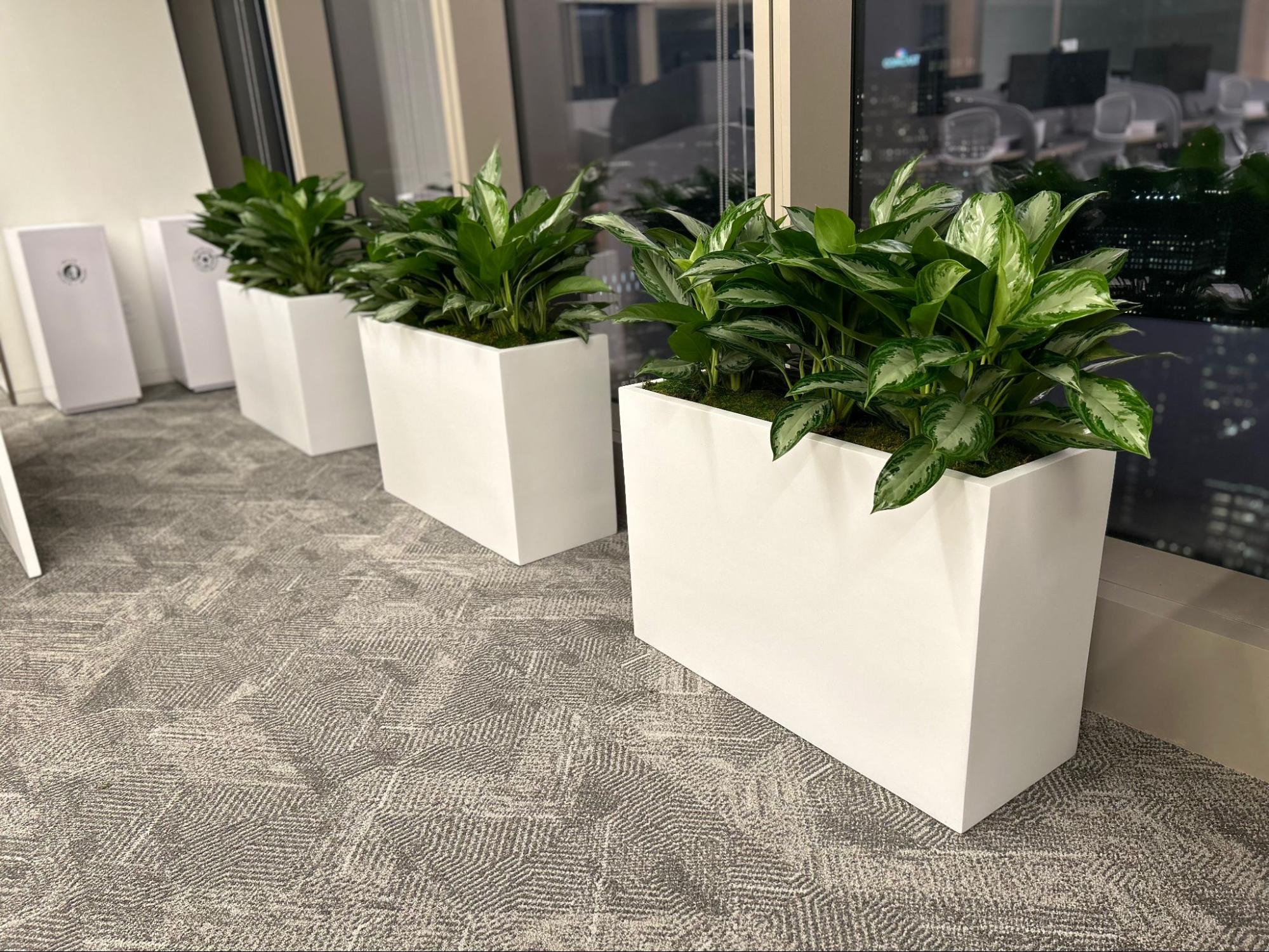
Deep floor plates, tinted glazing, and neighboring towers that block the afternoon sun leave many New York City and New Jersey workspaces with very little direct light. Interior zones can sit forty feet or more from the nearest window, and whatever light arrives has usually been filtered twice before it reaches a desk. For facility and office managers, that reality tends to end the conversation about greenery before it starts.
In practice, low-light office interiors can support healthy, attractive plantings year-round once the species, the placement, and the care routine are matched to the light a space actually receives. Greenery has become a visible part of tenant experience and workplace wellbeing, and its absence in a lobby or lounge registers as quickly as a worn carpet does.
What follows covers three things: which plant types genuinely thrive in reduced light, where each one belongs in a typical office layout, and how informed selection protects your maintenance and replacement budget over the long term.
Plant Types That Thrive in Low-Light Office Interiors Without Direct Sunlight
Most plant catalogs offer far more choice than a shaded office actually needs, which works in your favor. A handful of proven species will carry the majority of a commercial interior.
- Pothos (Epipremnum aureum) is the workhorse of shaded offices. Trailing vines fill shelving and cabinet tops, irregular watering does little damage, and the plant recovers visibly once conditions improve.
- Snake plant (Sansevieria) holds its architectural, upright form in dim corners. Thick leaves store water, so a maintenance schedule that skips a week causes no real harm.
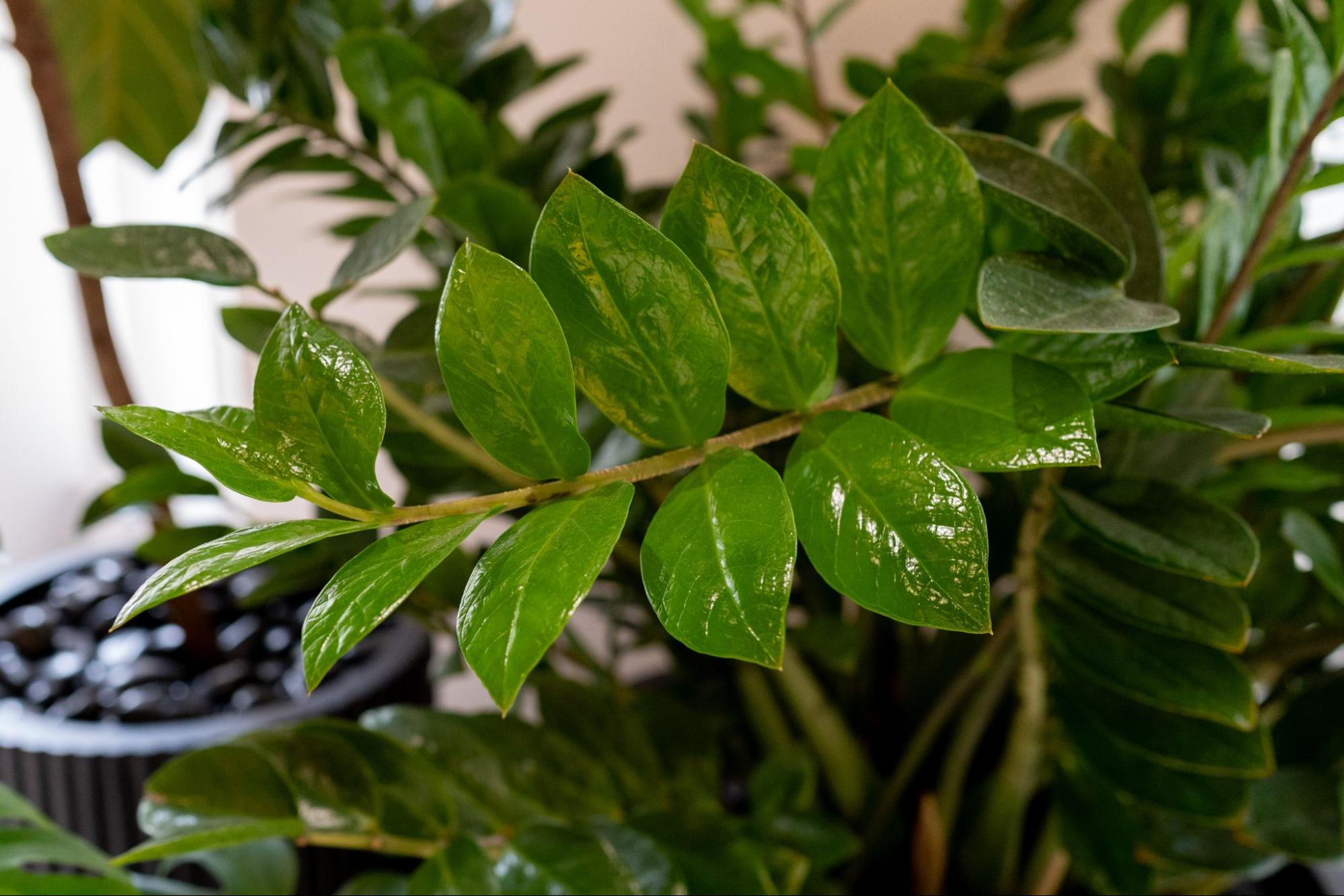
- ZZ plant (Zamioculcas zamiifolia) draws on underground rhizomes for moisture and keeps its glossy, deep green foliage in conditions that leave most species leggy and pale.
- Chinese evergreen (Aglaonema) brings pattern and color variation to spaces where flowering is unrealistic. Darker green cultivars handle deeper shade than the variegated ones.
- Cast iron plant (Aspidistra elatior) earns its name by tolerating shade deeper than almost anything else in professional interiorscaping, as well as the temperature swings near a lobby entrance.
Behind that caveat lies a larger distinction: “low light tolerant” and “no light” describe very different conditions. Every plant needs some usable light to photosynthesize, so a windowless conference room or a storage-adjacent corridor lit only by fixtures on a timer will not sustain living material without help. Setting that expectation early spares everyone the slow disappointment of watching a specimen decline in a spot that was never going to work.
At Cambridge, we also recommend standardizing on a small group of proven performers across a building instead of assembling a wide variety. A consistent palette simplifies watering schedules and makes problems easier to spot, and a technician handling a replacement works with material the rest of the program already supports.
Matching Plant Scale to the Space
Light tolerance tells you what will survive in a given spot. Scale tells you what belongs there.
Larger floor specimens carry the visual weight in lobbies, reception areas, and elevator banks. Dracaena varieties reach six feet or more and read well against tall lobby walls. Mature ZZ plants in substantial planters hold their own beside a reception desk while demanding far less light than a ficus would. Visitors register these plants within seconds of walking in, which justifies the investment in a quality container and a proper maintenance plan.
Smaller desktop and shelf plants do quieter work. Pothos and heartleaf philodendron suit individual workstations and low shelving, where a trailing habit softens hard edges. They also sit further from windows and closer to overhead fixtures than almost anything else in the office, which makes their placement worth a closer look.
Understanding Light Levels and Where to Place Each Plant
Light in an office falls into rough zones rather than arriving as one uniform condition, and a plan that respects those zones will outperform one that treats every interior surface the same.
Bright indirect light generally means within five to eight feet of an unobstructed window, out of the path of direct beams. Medium light covers the band roughly eight to fifteen feet in, along with areas near windows shaded by blinds or neighboring buildings. Low light describes the interior beyond that, such as hallways, closed conference rooms, and workstation clusters, which are lit almost entirely by overhead fixtures. As a quick field test, if you can read fine print comfortably without a task lamp at midday, most low-light species will manage there.
Several placement rules follow from those zones, starting at the perimeter. Reserve your most light-hungry material for corner offices and window-adjacent lounges. Push snake plants, ZZ plants, and cast iron plants deeper into the floor plate, where their tolerance does real work. Watch north-facing exposures, steady but dim all day, and the tinted or low-e glazing common in newer NYC towers, which cuts transmitted light well below what the view through it suggests. Conference rooms whose doors stay closed between meetings are harder than their window count implies.
Where an interior zone falls short of what any species can handle on daylight alone, supplemental grow lighting closes the gap. Modern LED fixtures can be specified to blend with existing architectural lighting, and running them on the building’s occupancy schedule usually keeps foliage dense. Coordinate with your lighting consultant early, since retrofitting a fixture into a finished ceiling costs far more than folding it into a planned upgrade.
Why Plant Health Protects Your Replacement Budget
Every decision above eventually resolves into a line in the facilities budget, and that line is replacement.
A plant in the wrong light fails quietly. It thins out, stretches toward whatever light it can find, drops its lower leaves, and loses the full silhouette that made it worth specifying. Six to twelve months later, it needs replacing, and the cycle restarts with the same species in the same spot. Repeated across a floor, that pattern becomes one of the more avoidable lines in a facility’s budget.
It is important to note, though, that water usually causes more losses in an office than light does. Overwatering is what ends most low-light species indoors, and the mechanism is easy to miss. A plant in reduced light runs a slower metabolism and draws water far more slowly than the same plant beside a window, so a well-meaning weekly routine keeps the root zone saturated, starves the roots of oxygen, and invites rot. Snake plants and ZZ plants often go two or three weeks between waterings in a dim interior. Sizing the schedule to light conditions rather than the calendar prevents more losses than any other single adjustment.
Getting selection and care right from the start changes those economics, since plants matched to their conditions hold their form for years, replacements become occasional, and the visual quality of the space stays consistent. Professional commercial interior landscaping maintenance is what holds that steady state in place, with trained technicians reading each plant’s condition, adjusting water and feeding by zone, and catching pest or root problems while they remain small.
The Broader Business Case: Productivity and Certification Value
Avoided replacement costs make the practical argument, though the returns extend to the people using the space and to the property competing to keep them.
In 2014, researchers led by Marlon Nieuwenhuis of Cardiff University introduced plants into lean, plant-free offices in the UK and the Netherlands and measured what changed. Working with the universities of Exeter, Groningen, and Queensland, they recorded a 15 percent increase in worker productivity, in what was the first study of its kind carried out in working commercial offices rather than a laboratory setting.
Beyond what happens at the desk, a well-maintained interior plant program can also count toward WELL Building Standard certification. Its Biophilia II quantitative feature credits potted plants or planted beds covering at least 1 percent of floor area per floor, or a plant wall covering at least 2 percent.
With roughly 4,500 certified projects worldwide against LEED’s 100,000-plus, WELL remains far less common than LEED, and that scarcity is what gives the credit its weight. Supporting the standard helps a property stand out to corporate tenants who weigh employee wellness in site selection, a meaningful differentiator in a competitive New York City leasing market.
Let There Be (Low) Light: Building a Greener Office Interior
Limited sunlight is a design constraint, and a solvable one. The right species, placed according to the light each zone actually receives and watered on a schedule that matches their slower pace, will sustain a vibrant, professional look in low-light office interiors year after year. Informed choices at the specification stage also keep replacement costs down, turning greenery into a stable asset instead of a recurring expense.
Our team has spent more than two decades bringing plants into New York City buildings where the light is anything but ideal, from Long Island City lobbies to Midtown corporate floors, alongside our exterior landscaping work. We design each interior program around the building’s real conditions and the maintenance rhythm that will keep it healthy.
Ready to bring greenery into the dimmer corners of your space? Contact Cambridge today to request a quote and talk through a low-light plant program built for your property.