
Flowers are not better than plants at a NYC building entrance, and neither is the reverse, because the honest answer is that the two do different jobs. The real comparison is narrower than flowers versus greenery. It sits between seasonal flowering plantings and structural foliage, each of which earns its place under different conditions.
An entrance works as a branding surface before it is anything else, setting the first impression on tenants, visitors, and prospective clients before anyone reaches the door. That makes the planting choice worth more thought than a simple preference for blooms or greenery.
What tips the decision one way or the other comes down to a handful of practical factors, such as building type, outdoor exposure, upkeep capacity, and budget, and the sections below work through each one.
What Flowers and Foliage Signal at a Building Entrance
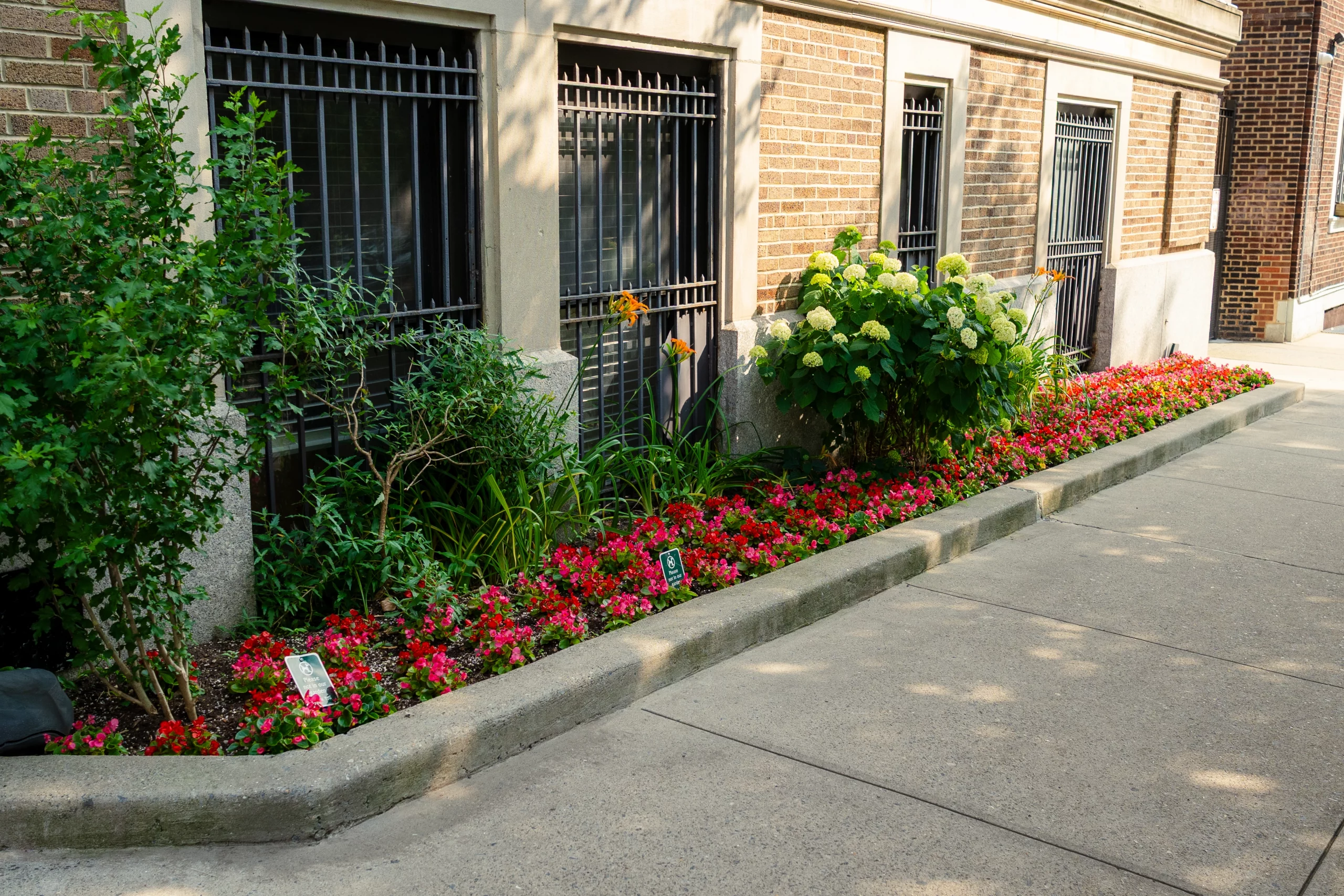
Every entrance sends a message at street level, and the planting style shapes it as much as the architecture behind it. Foliage plantings, meaning the evergreens, grasses, and structural shrubs that hold their form year-round, read as permanent, polished, and understated. They are the visual equivalent of a firm handshake, telling a passerby that the building is stable and well run.
Flowering plantings speak in a different register. Bright, changing, and tied to the season, they come across as warm and active, signaling hospitality and approachability rather than restraint. Picture the clipped boxwood and upright grasses fronting a Class A office tower next to a boutique hotel entrance banked with rotating seasonal color, and the difference in tone registers before anyone reads a single sign.
Neither message is better in the abstract, and what actually matters is which one fits the property doing the talking.
Which Signal Fits Your Building Type
Corporate and institutional properties usually lean foliage-forward, since a consistent, year-round look reinforces the stability and attention to detail their tenants expect from a serious address. Color still belongs in that setting, only used with a lighter hand, where a narrow band of seasonal blooms or a pair of planted containers can mark the changing seasons without undercutting an otherwise restrained impression.
Hotels, retail centers, and residential buildings tend to benefit from the opposite emphasis. For these properties, seasonal color, energy, and a visibly welcoming entrance become an extension of the guest or resident experience, so leaning into blooms that shift through the year works in their favor rather than against the brand.
How Each Option Holds Up at an Exposed NYC Entrance
Few spots on a commercial property are harsher than the entrance. Paving and glass bounce reflected heat back onto the plantings through summer, clusters of tall buildings funnel and accelerate wind down to street level, and constant foot traffic layered with winter road salt adds stress that a sheltered courtyard bed never faces.
Hardy foliage plantings, especially evergreens and ornamental grasses, generally shrug off those conditions and hold their structure and color across all four seasons. Flowering plantings can still deliver a strong impression while they are in bloom, but heat, wind, and cold wear on soft growth and petals far faster, which shortens the window where the display looks its best. Even sturdy annuals set into an exposed sidewalk bed can look scorched or wind-battered weeks earlier than the same plants would in a protected plaza a few feet from the street.
This gap is where professional commercial landscaping proves its value. The plants that survive an exposed sidewalk on a windy avenue are rarely the showiest options at the garden center, and knowing the difference is what keeps an expensive display from failing by August.
What Each Option Costs to Maintain Across a Year
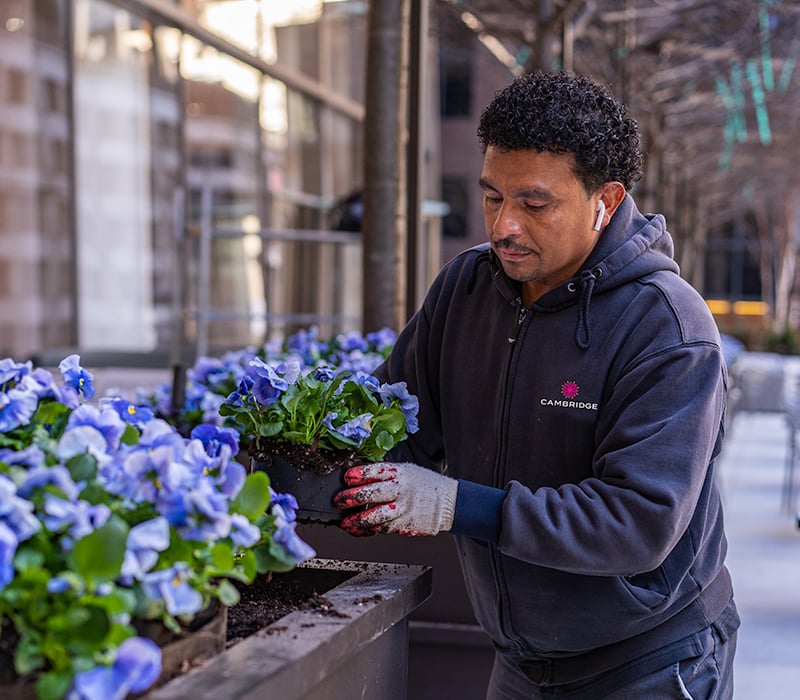
Across a full year, the cost gap between the two options comes down to maintenance rhythm more than sticker price. Seasonal annuals, which form the backbone of most flower-led entrances, typically need three or four rotations a year to stay fresh, and every changeover means fresh material plus the labor to pull the old planting and install the new one.
Those rotations also have to be timed to the season and to crew availability, which is easy to underestimate when a budget is set once and expected to hold. Foliage plantings and established perennials ask for far less, with the work shifting toward pruning, seasonal cleanup, and periodic health checks rather than wholesale replacement.
The budget difference, therefore, shows up in its shape as much as its total, because a foliage base carries a higher upfront investment but a steadier, more predictable annual spend, while a flower-led entrance concentrates recurring cost around each seasonal swap. Anticipating those swaps ahead of time is where seasonal landscape planning keeps a flowering program from quietly inflating the yearly maintenance budget, since rotations booked and stocked in advance almost always cost less than last-minute ones.
A Foliage Base With Flowering Accents
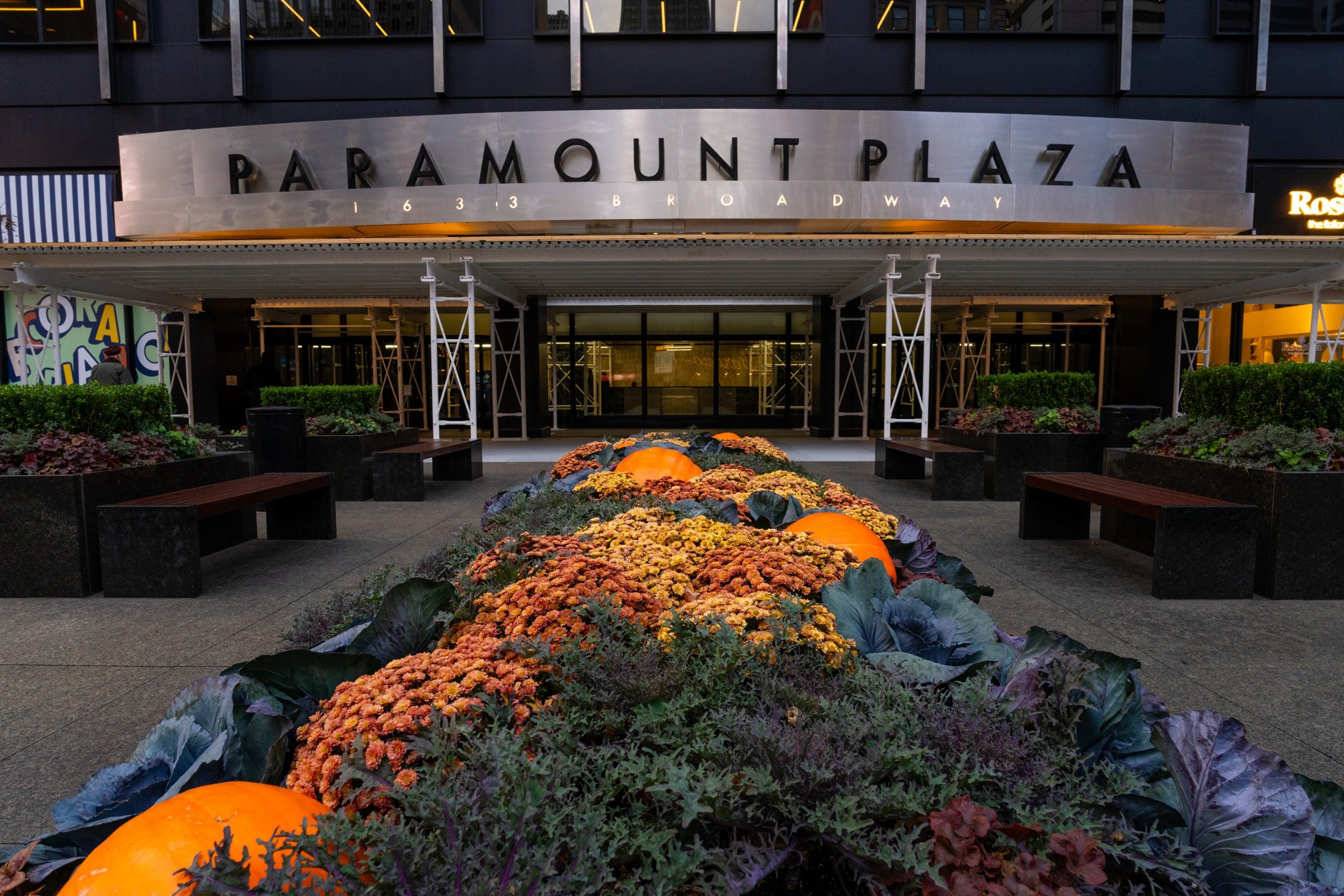
The strongest entrances often refuse to choose between the two. A year-round foliage backbone does the heavy lifting, framing the door with structure that looks intentional in every month, while seasonal flowering color goes into a few defined zones such as the containers flanking the entrance or a single framed bed within the main sightline. Contained that way, each changeover touches only a small, high-impact area instead of the entire frontage.
The payoff is favorable because concentrating the blooms where they are seen most delivers the majority of the visual lift for a fraction of the rotation labor and material cost. Between rotations, the foliage base still carries the look, so the entrance never sits in an awkward gap waiting for the next planting.
An entrance built on this logic reads as welcoming and well-kept through all four seasons without becoming a constant drain on the maintenance schedule, which is usually the balance a building manager is actually looking for.
Why the Right Choice Depends on Your Entrance
No single answer fits every NYC building entrance. The right call depends on the specific spot, its exposure, the building’s brand, and the maintenance capacity behind it. Sorting those variables is exactly what a professional assessment is for, weighing what will actually survive the microclimate against what the property wants to say and what its team can realistically keep up with.
The same avenue can present a wind-scoured corner and a sheltered inset within a single block, so a scheme that thrives next door is not automatically the right one for the entrance in question. A first impression built on that kind of fit is what supports tenant experience, brand identity, and the long-term property value that a tired or failing entrance quietly chips away at.
Cambridge has planned entrance plantings for commercial properties across NYC and the tri-state area, and that experience turns the flowers-or-foliage question into a straightforward, site-specific recommendation rather than a guess. If you are weighing the options for your own entrance, we would be glad to help. Contact our team to plan a planting suited to your space, your exposure, and the impression you want to make.