Entryway landscape design refers to the intentional planning and installation of plants, hardscape elements, lighting, and other design features that shape the exterior approach to a building. For commercial properties, this encompasses everything from the plantings flanking a front entrance to the pathways, raised beds, lighting fixtures, and seasonal color programs that define how a property looks and feels from the street.
Done well, these elements work together to communicate something to a visitor, prospective tenant, or client before they even step through the door. The approach, the plantings, and the overall condition of the exterior all signal how the building is managed and what it’s like to be inside. For commercial properties in New York City, where competition for tenants and foot traffic is constant, that first impression carries real weight.
This post covers the design elements, plant strategies, hardscape choices, and seasonal planning considerations that help commercial properties create entrances that feel polished, purposeful, and aligned with their identity.
What Makes a Commercial Entryway Landscape Design Work
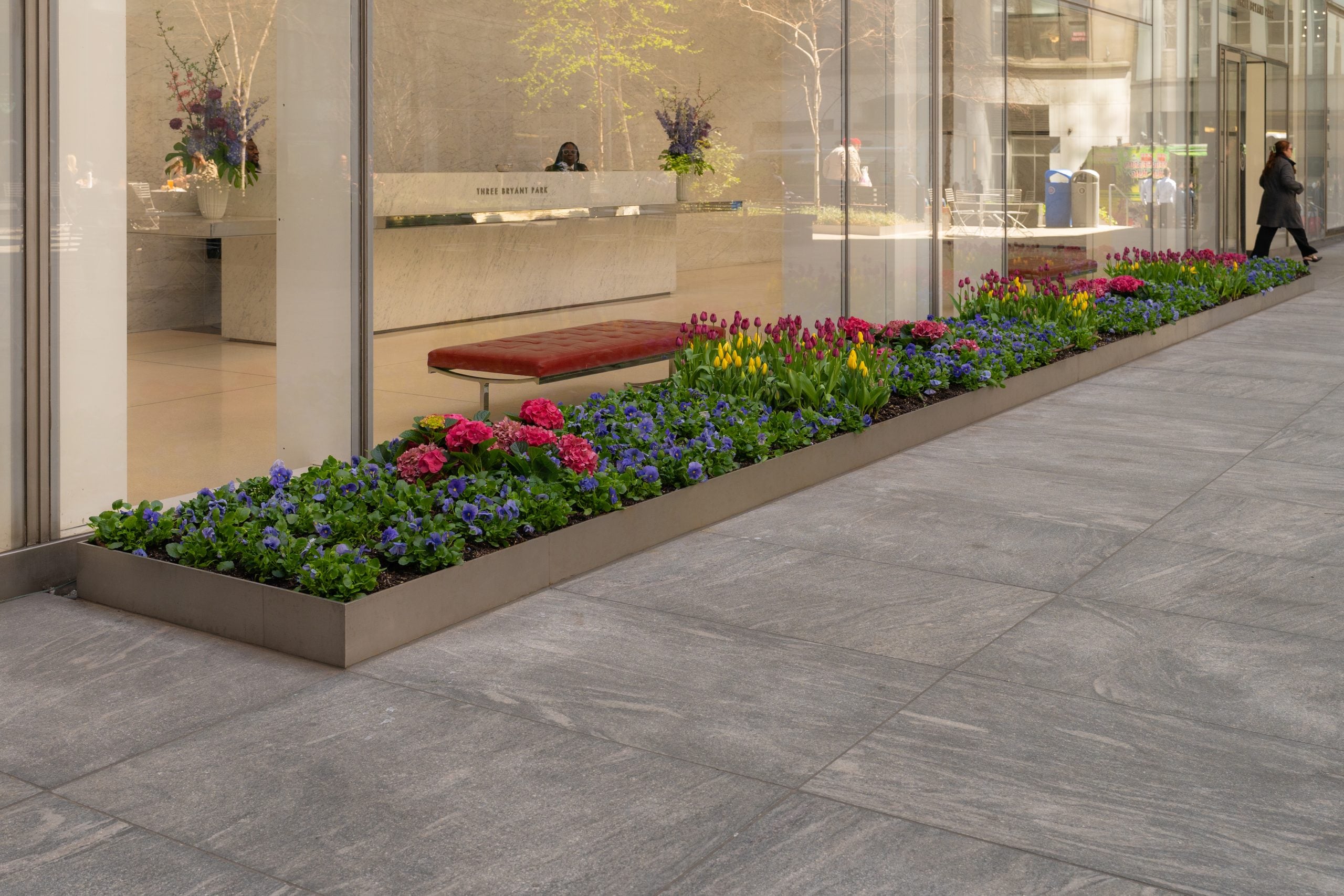
Effective commercial entryway landscaping centers on creating a designed experience that communicates quality, supports operations, and holds up under real-world conditions. For NYC properties, that means accounting for a dense urban environment, variable climate, and the practical realities of high foot traffic.
A few principles define strong entryway design at the commercial scale.
Durability and low maintenance performance. Plantings and hardscape elements in a commercial entryway must perform consistently without requiring constant intervention. Species selection, material quality, and installation standards all contribute to how well the design holds up between service visits. In NYC specifically, entryway plantings need to withstand wind exposure, compacted urban soils, pollution, and the stress of freeze-thaw cycles.
Cohesion with the building’s architecture and brand identity. The landscape should feel like a deliberate extension of the building, not an afterthought. A sleek glass office tower and a pre-war mixed-use building call for different design vocabularies. Formality, scale, planting palette, and materials should all reflect and reinforce the property’s character. For properties where branding is a priority, such as hospitality venues or corporate headquarters, this alignment becomes even more critical.
Functional design that guides arrival. Beyond aesthetics, a well-designed commercial entryway organizes how visitors navigate the space. Defined pathways, clear sightlines to the entrance, and appropriate lighting all contribute to a sense of arrival that feels intuitive and welcoming. This functional layer is often what separates a professionally designed entryway from one that simply has plants near the door.
Entryway Landscape Design Ideas for Commercial Properties
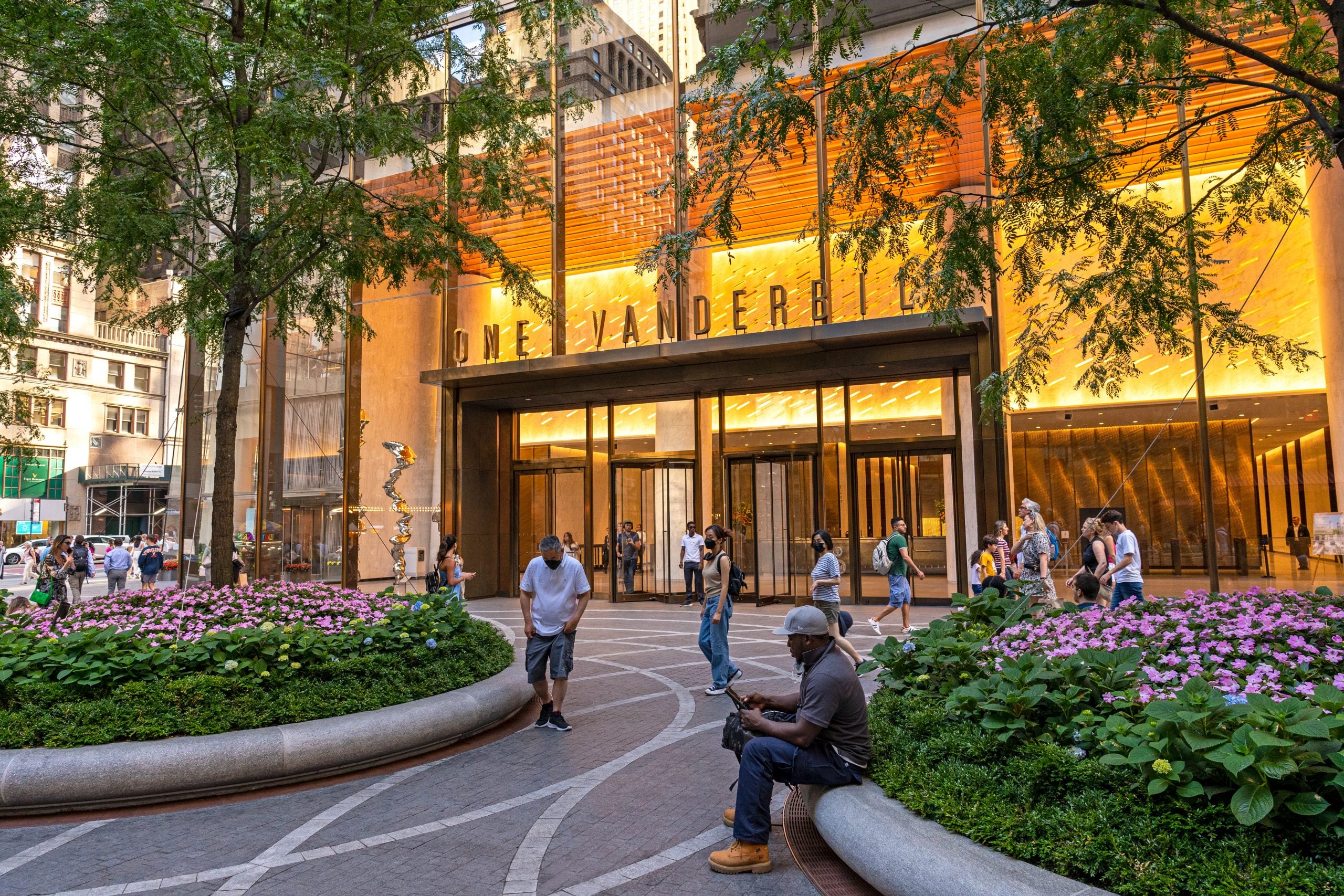
With those principles in place, the following ideas cover the key design elements that building managers and leasing teams can bring into their planning conversations.
1. Planting Strategies That Balance Impact and Practicality
Layered planting designs create visual depth and make an entryway feel intentional rather than sparse. A typical layered approach works from back to front: taller structural plants or small ornamental trees at the rear, mid-height shrubs in the middle, and lower groundcovers or seasonal annuals at the front edge. This gives the entryway volume and interest without overwhelming the architecture.
Seasonal color programs keep the entryway looking fresh throughout the year. Rather than relying on year-round evergreens alone, a rotating program of seasonal annuals and perennials ensures that something is always in bloom or in peak condition. This is especially effective for properties that want to signal ongoing investment in their exterior presentation.
For NYC properties, selecting species suited to the urban climate improves long-term performance. Native and adaptive plants, such as ornamental grasses, inkberry holly, and serviceberry, tend to perform well in urban planters and beds because they’ve evolved to handle the conditions that stress less-adapted species. Native plantings also support local pollinators and, once established, require less supplemental irrigation than non-adapted species, reducing long-term maintenance demands.
2. Hardscape Elements That Define the Space
Hardscape is the structural foundation of a commercial entryway and often the element that has the greatest impact on how the space reads from the street. Well-designed pathways establish clear pedestrian routes and create a sense of procession toward the entrance. Edging materials, whether steel, stone, or concrete, give planting beds a clean, finished look and help contain plantings over time.
Raised beds are a practical solution for many NYC commercial properties, particularly those with limited soil depth or existing pavement. They allow for proper root zone depth, improve drainage, and create visual elevation that adds dimension to an otherwise flat entry plane.
Boulders or large stone landscaping elements work particularly well in entryway settings where low-maintenance visual weight is needed. A well-placed grouping of natural stone boulders anchors a planting bed, reduces the amount of plant material needed to fill a space, and provides year-round structure that holds up in winter when plantings have died back. The natural texture of stone also contrasts well with manicured plantings, adding a layer of visual interest that feels grounded and premium.
3. Lighting and Vertical Elements for Presence Into the Evening
An entryway that looks polished during the day but disappears after dark is a missed opportunity. Uplighting on architectural plantings, specimen trees, or building facades extends the visual impact of the landscape into evening hours and signals presence to anyone approaching the property at night.
Pathway lighting serves both safety and design purposes. Low-profile bollard lights or recessed pathway fixtures define pedestrian routes without overpowering the landscape. When designed cohesively with the rest of the entry, they contribute to the overall sense of quality and care.
Vertical elements such as sculptural topiaries, trained shrubs, or columnar trees add height and formality to an entry composition. These elements draw the eye upward, create a sense of enclosure on either side of the entrance, and give the design a sense of intention that flat, ground-level planting alone cannot achieve.
Seasonal Considerations for NYC Entryway Landscapes
One of the most common oversights in commercial entryway planning is designing for one season and leaving the other three unaddressed. A well-executed entryway landscape performs across the full calendar year, which in New York City means navigating four distinct seasons with very different conditions.
Spring and summer are the highest-visibility periods for most commercial properties. This is when color programs should be at their peak, and plantings are actively growing. For properties with seasonal tenant events or increased foot traffic, a spring refresh is often worth the investment to ensure the entryway is at its best when it matters most.
Fall offers an opportunity for transition plantings, ornamental grasses in seed, fall-blooming perennials, and warm-toned foliage that extend the entryway’s visual interest before winter arrives. This is also the planning window for winter structure plantings and any holiday decor integrations.
Winter is when NYC entryway landscapes face their most significant stress. Freeze-thaw cycles, sidewalk salt runoff, heavy wind, and reduced light all affect plant health and material integrity. Designing for winter means selecting species with good cold hardiness, avoiding salt-sensitive plantings near treated sidewalks, using containers and beds with adequate drainage to prevent frost heave, and ensuring that structural elements like stone, edging, and hardscape hold up under cold conditions. Evergreen structure plantings, such as boxwood, yew, or arborvitae, are essential for maintaining a composed entryway appearance when deciduous plants have gone dormant.
A seasonal service schedule is the operational layer that keeps all of this working. Regular maintenance visits, timed to each seasonal transition, ensure that plantings are replaced, pruned, or refreshed on schedule and that the entryway consistently reflects well on the property.
An Entryway That Works for Your Property, Year-Round
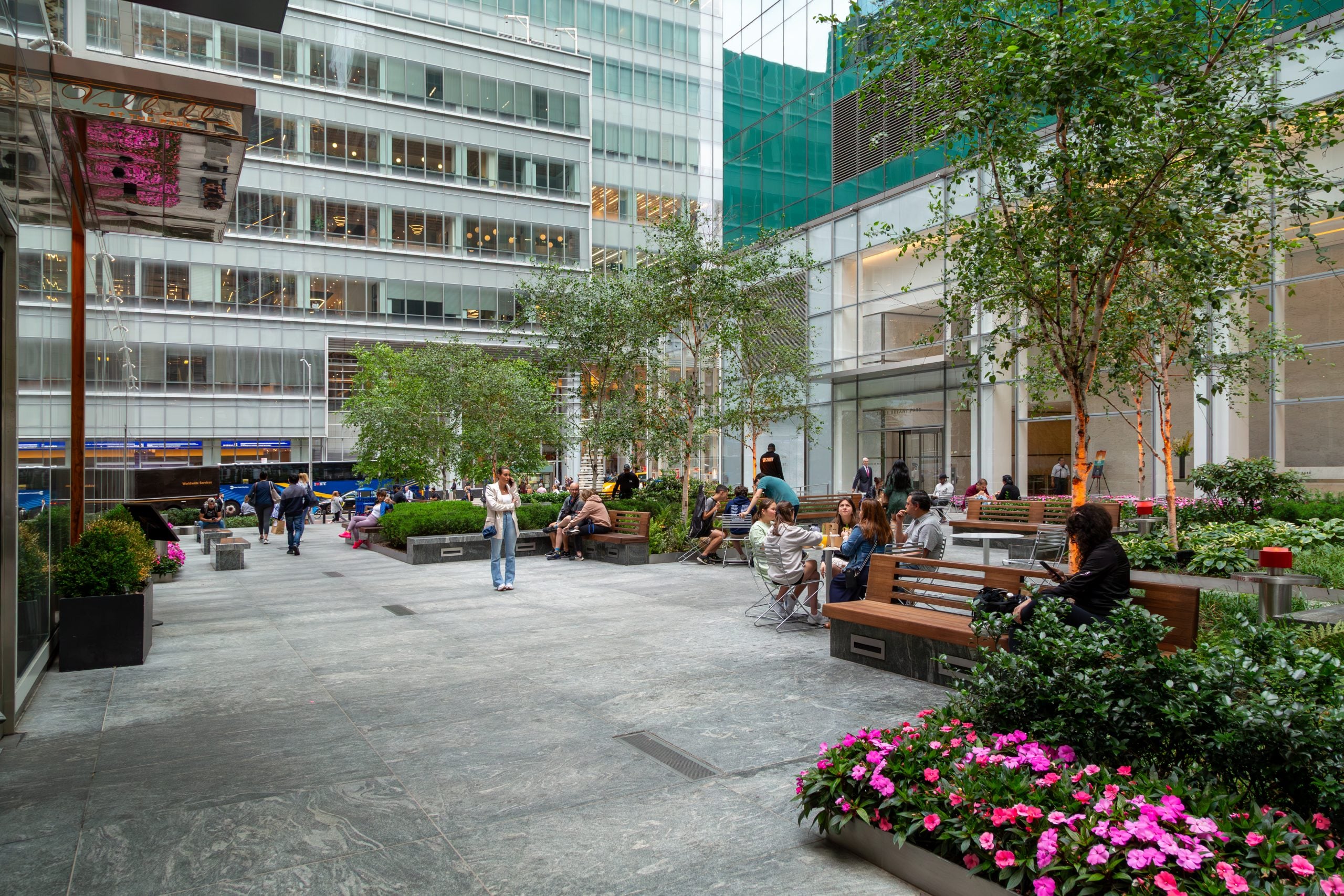
Entryway landscape design is an investment in how your property is perceived before anyone walks through the door. The right combination of thoughtful planting design, hardscape structure, quality lighting, and proactive seasonal planning creates an entrance that holds up across the full year and communicates something meaningful about how the property is managed.
For NYC commercial properties, where first impressions influence leasing decisions, tenant retention, and brand credibility, that investment is difficult to overlook.
If you’re planning an entryway refresh or want to invest in commercial landscaping in NYC that elevates your property’s exterior, our team at Cambridge is ready to help. Contact us today to schedule a consultation and explore what the right entryway design can do for your property.