
Large commercial properties present a challenge that goes well beyond aesthetics. Whether it is a sprawling corporate campus, a mixed-use development, or a multi-building healthcare facility, helping visitors find their way through the space is a fundamental operational concern. When people struggle to navigate a property, the consequences are immediate: congestion at the wrong entry points, frustrated tenants, and a first impression that works against everything the building represents.
Landscape wayfinding offers a smarter approach. By integrating design intentionally into how a site is organized, commercial properties can guide visitors naturally and efficiently without relying entirely on signage. For building managers and property owners across NYC and the tri-state area, understanding how landscape wayfinding works and what it delivers is a meaningful step toward a better-performing property.
What Is Landscape Wayfinding?
Landscape wayfinding is a design strategy that uses the physical elements of an outdoor environment to help people orient themselves and move through a space. Rather than directing visitors through posted signs alone, it works through the arrangement of pathways, plantings, lighting, hardscape features, and spatial organization to communicate direction intuitively.
When done well, landscape wayfinding operates quietly in the background. Visitors do not consciously register that they are being guided. They simply find the entrance without hesitation, follow the natural path toward the plaza, and arrive where they need to be without confusion.
That seamlessness is the goal of intuitive site design, and on large commercial properties with multiple buildings, varied entry points, and high daily foot traffic, it transforms the outdoor environment into an active tool for navigation and visitor experience. This is where commercial landscaping expertise makes a meaningful difference in how a site is planned and experienced.
Why Navigation Is Often Challenging on Large Commercial Sites
Anyone who manages a large commercial property understands that size creates complexity. Office parks, medical campuses, retail centers, and mixed-use developments often feature multiple buildings, layered parking structures, transit connections, service areas, and pedestrian plazas, all competing for a visitor’s attention the moment they arrive.
First-time visitors in particular can struggle to identify the correct entry point, distinguish between parking zones, or locate the building they need within a complex that looks similar in every direction. Without clear circulation routes embedded into the environment, the most logical path is rarely obvious. The result is inefficiency at best and real safety concerns at worst: pedestrians cut across landscape areas not designed for foot traffic, vehicles and people converge where separation was intended, and high-traffic arrival zones become bottlenecks.
The Negative Impact of Confusing Site Layouts
These are not minor inconveniences. When movement patterns are unclear, informal paths form through planted areas, accelerating wear and increasing maintenance demands. Guests arriving from different access points may wander before locating the primary entry, compounding congestion during peak hours. A layout that fails to account for how people actually move through a space will consistently underperform, regardless of how well its individual landscape elements are executed.
Landscape Design Elements That Support Wayfinding
Effective landscape wayfinding relies on a coordinated set of design elements that define movement, create hierarchy, and communicate direction. No single feature carries the full responsibility; it is the combination that produces a cohesive, readable environment.
Pathways and walkways are the most direct tools available. When a path is clearly defined, appropriately scaled, and aligned with the routes visitors naturally want to take, it communicates its purpose without a sign. Material, width, and lighting all signal priority and guide pedestrian flow toward buildings, plazas, and transit connections.
Plantings and landscape borders serve as soft boundaries that organize space without creating barriers. A row of planted beds along a circulation route, a hedge line separating pedestrian areas from vehicle zones, or a grove of trees marking a gathering space all contribute to a more readable site layout by clarifying where movement is and is not intended.
Lighting reinforces route hierarchy after dark and adds a layer of safety throughout. Accent lighting along primary pathways, uplighting at key entry points, and landscape-integrated fixtures that illuminate decision points extend the wayfinding system’s effectiveness across all hours of operation.
Creating Visual Cues with Landscape Features
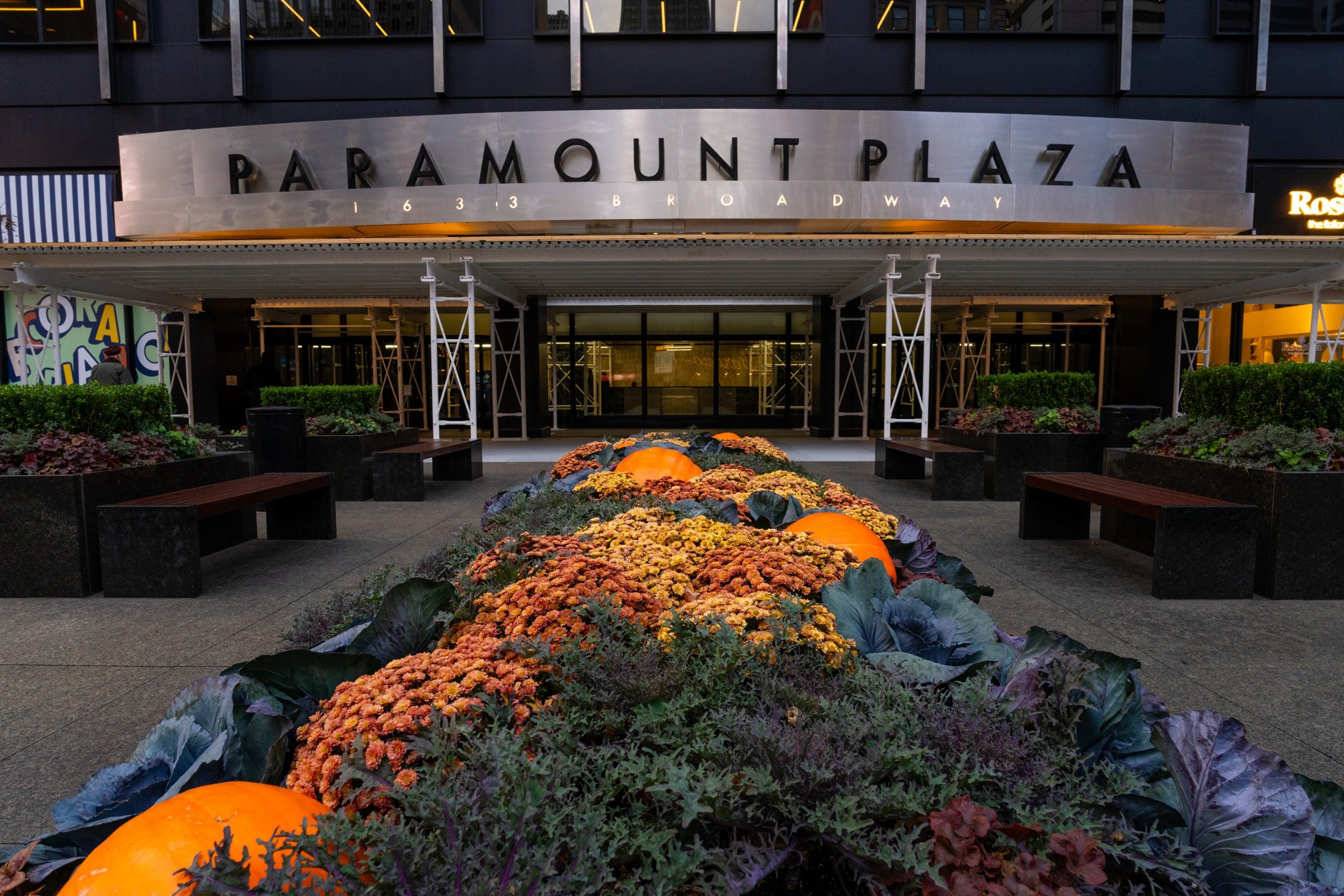
On a large site where many zones look similar, distinctive features give visitors a reference point for orientation. Specimen trees, large seasonal planters, or a signature planting scheme at a primary entrance create visual anchors that visitors remember. Plazas and courtyards function similarly; a well-designed outdoor gathering space signals a central node in the site layout, drawing visitors toward it and clarifying the surrounding circulation structure.
The goal is not decoration for its own sake. Each visual cue should earn its placement by reinforcing a path, marking a destination, or helping visitors understand the spatial logic of the property at a glance.
How Landscape Wayfinding Improves Pedestrian Circulation
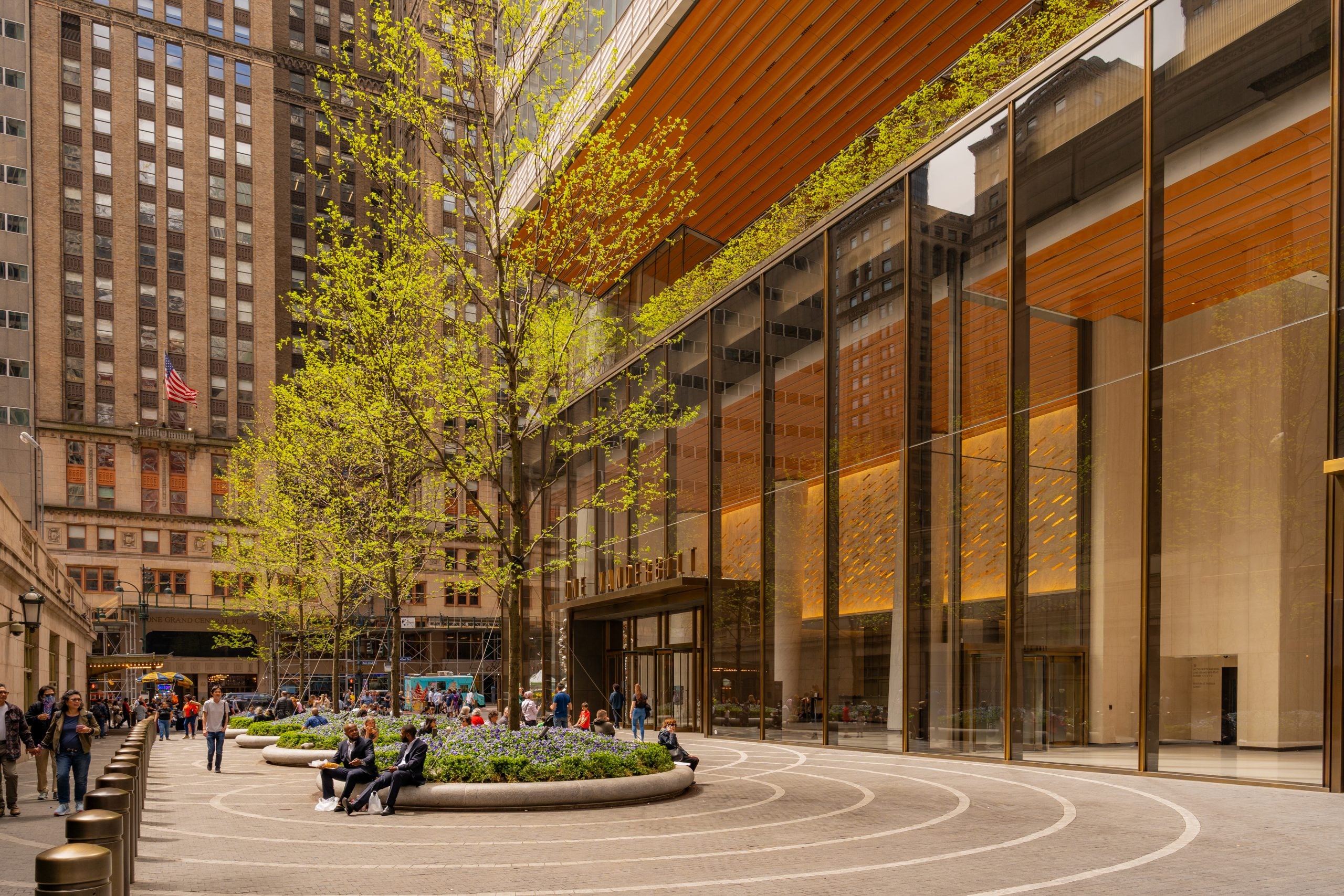
Pedestrian circulation is about more than moving people from one point to another. It is about managing flow, maintaining safety, and ensuring the site operates efficiently under a range of conditions, from a quiet Tuesday morning to a high-traffic event day.
When the path of least resistance is also the correct path, visitors move confidently, and congestion is absorbed more evenly across the site.
Landscape design also plays a direct role in separating pedestrian and vehicle circulation through planted medians, grade changes, and defined walkway edges, reducing conflict points in areas where foot traffic and vehicle movement overlap.
In dense commercial environments, a property that manages these dynamics well is perceived as more organized, more professional, and more considerate of the people who use it every day.
Supporting Accessibility and Clear Movement Paths
Accessibility is a non-negotiable consideration in commercial landscape circulation planning. ADA-compliant pathways, gradual grade transitions, and appropriately placed rest areas ensure the site works for all visitors regardless of mobility needs. Open sightlines toward major entry points, pathways free of visual obstructions, and lighting that maintains visibility after dark all contribute to a more inclusive environment. For property managers overseeing campuses with diverse daily populations, including employees, clients, patients, and delivery personnel, these details directly affect how the site functions at scale.
Designing Intuitive Site Layouts That Guide Visitors Naturally
The strongest landscape wayfinding systems are the ones visitors never notice. The site simply makes sense. This outcome is the result of understanding how visitors actually approach and move through a property before any design decisions are made.
Where are the primary arrival points? What are the most traveled routes between parking areas, transit stops, and building entries? Where do people tend to pause, change direction, or lose their bearings? Answering these questions determines where circulation elements are placed and how landscape features are used to reinforce movement.
Plantings, borders, and outdoor features aligned with natural desire lines, the paths people instinctively prefer, make correct navigation feel effortless. Entry points and plazas positioned with clear sightlines from arrival zones allow visitors to identify their destination immediately. For building managers overseeing complex commercial environments, this level of planning is one of the highest-value contributions a landscape program can deliver.
The Business Value of Landscape Wayfinding
Beyond visitor experience, landscape wayfinding has measurable implications for how a commercial property performs as an asset.
A well-organized site signals professionalism. When tenants, clients, and prospective occupants arrive and move through the property without difficulty, it reinforces confidence in the building’s management and strengthens its brand identity. Operationally, clear pedestrian circulation reduces informal wear patterns that drive up landscape maintenance costs, manages entry and exit flow during peak hours, and supports emergency egress planning in high-traffic zones.
For asset managers and property owners focused on long-term value, investing in intuitive site design is not simply a design decision. It is a property management decision with returns that compound over time through reduced maintenance, stronger occupancy, and a consistently positive visitor experience.
Guiding Every Visitor from Arrival to Destination
Landscape wayfinding is one of the most practical applications of commercial landscape design for large, complex properties. By using plantings, pathways, lighting, and spatial organization to guide movement, property managers can address navigation challenges at their source rather than compensating for a poorly planned site with more signage.
The value extends well beyond convenience. Intuitive site design shapes how tenants and visitors perceive the property, how safely and efficiently it operates, and how well it holds up as foot traffic evolves over time. For campus managers and large property owners, partnering with an experienced commercial landscaping team is the most effective way to bring that vision to life.
At Cambridge, we understand how thoughtful commercial landscape design supports both the visual quality and the functional performance of complex sites. Our team works with building managers and property owners throughout the region to develop commercial landscaping solutions that are as practical as they are beautiful, with landscaping services in New York available across Manhattan, Queens, Brooklyn, and beyond. To discuss your property’s landscape and circulation needs, contact our team today.