The lobby is the single space in a commercial building that every tenant, client, and visitor moves through, and the impression it creates takes hold before a word is spoken. Plants are one of the most effective tools available to building managers who want that impression to reflect quality and care. However, in entry spaces where conditions are demanding and aesthetic standards are consistently high, plant selection requires more strategic thought than it typically receives.
Not every plant that thrives in a back office or conference room holds up well in a lobby. Species such as dracaena, ZZ plant, and snake plant are well-suited to commercial entry environments. Conversely, many other plants that may look compelling in a design portfolio can deteriorate quickly when placed in a drafty, low-light entryway subject to constant foot traffic and public scrutiny.
The guidance below reflects what consistently performs well in interior landscaping for real entry environments, from initial selection criteria to the design decisions that keep a lobby looking its best long after installation.
Why Plant Selection Matters More in High-Traffic Entry Spaces
Commercial lobbies create conditions that most interior plants are not naturally equipped to handle. HVAC systems run at full capacity throughout large, open spaces, while exterior doors open and close continuously, bringing in cold air in winter and humidity in summer.
The result is an environment that fluctuates significantly between morning and evening as well as across seasons. These temperature swings and persistent drafts, which a standard office environment naturally moderates, can be severe in an entryway, and species not adapted to those conditions show stress quickly.
Lighting conditions introduce additional challenges. Many NYC commercial lobbies rely heavily on artificial lighting, and even buildings with floor-to-ceiling windows may not provide the even, consistent illumination that light-hungry species require. Consequently, a plant that looks lush in a well-lit showroom can thin out visibly in a shadowed entryway within just a few months.
What makes these conditions particularly consequential is that a lobby plant is always on display, so it needs to look polished every day, not just on the day it was installed. Any species prone to leaf drop, visible pest activity, or erratic growth will require more corrective attention than a commercial property schedule can reasonably absorb.
Ideal Plant Characteristics for Lobbies and Reception Areas
Most plant species that perform well in commercial lobbies share several key traits.
First, they tolerate low or artificial light without thinning out or losing color over time, which is a crucial quality in buildings where natural light is limited or variable.
Second, they handle temperature fluctuations and persistent drafts without showing signs of stress, maintaining their form and appearance even in demanding entryway conditions.
Finally, they remain presentable between professional care visits, which is essential for a space under daily public view.
The physical composition of the arrangement matters as much as the species themselves. The most effective lobby plantings pair a statement specimen that anchors the space with supporting plants that round out the arrangement without competing for attention.
Getting the proportions right, by matching plant height and mass to ceiling height and available floor area, is what separates a deliberate installation from one that simply occupies the space.
A Few Good Options
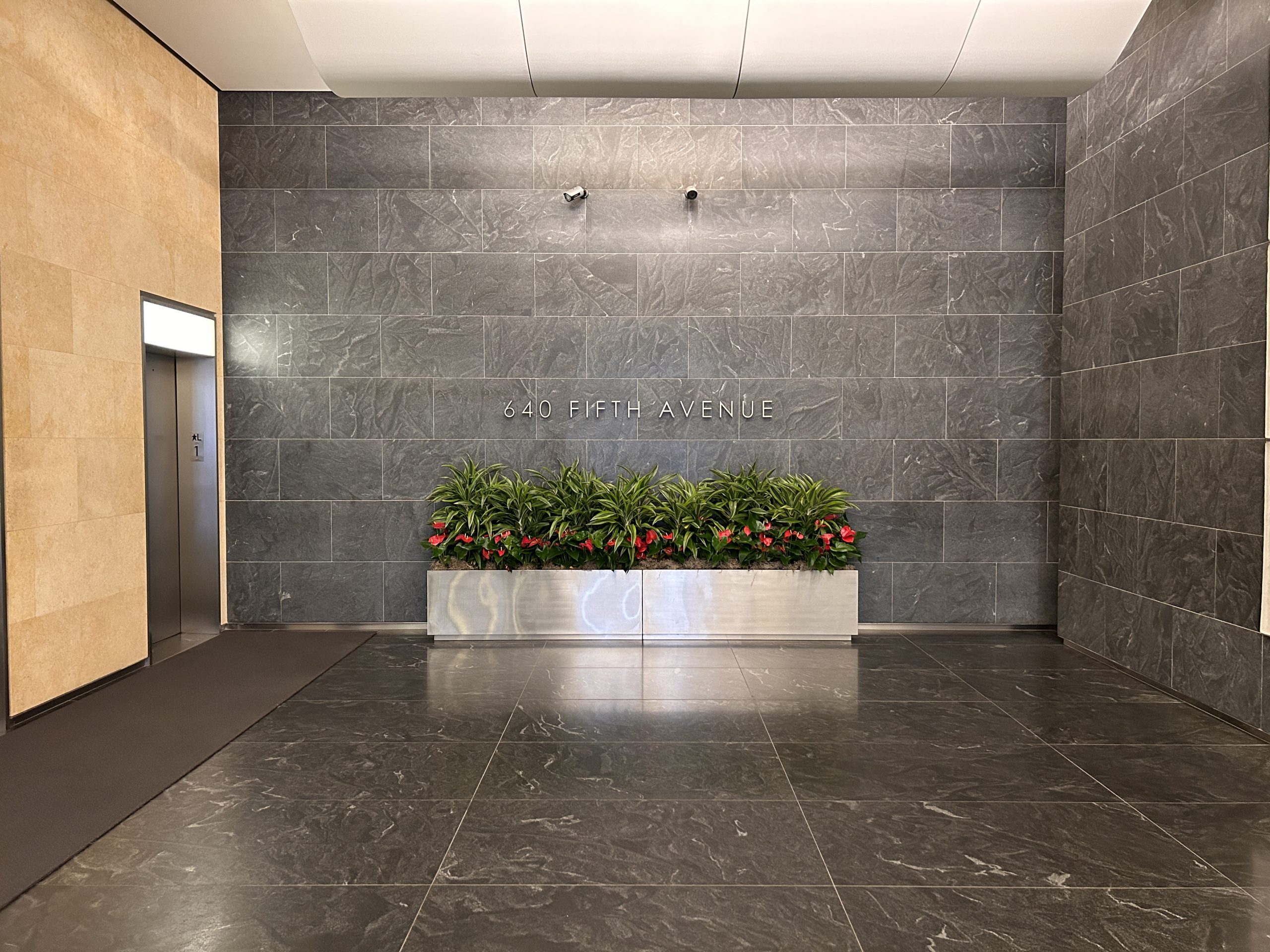
For larger-scale installations, Dracaena is one of the most dependable options in commercial lobby settings. It adapts well to low light and handles the temperature fluctuations typical of building entryways without showing visible stress.
The ZZ plant (Zamioculcas zamiifolia) brings similar resilience with the added advantage of minimal water requirements, helping it remain consistent and polished between scheduled care visits.
Where HVAC drafts are a primary concern, the cast iron plant (Aspidistra elatior) earns its name, handling harsh entryway conditions more reliably than almost any other available species.
Mid-scale species offer more flexibility in composition. Pothos works across a range of light conditions and can be trained to grow upright or left to trail, depending on the design intent, a degree of versatility that suits lobbies with varying layout needs.
The snake plant offers strong architectural form and minimal maintenance requirements, making it one of the most reliable choices in commercial interiors.
Chinese evergreen (Aglaonema) handles both low light and humidity fluctuations well, making it a practical fit for entryways that experience significant air exchange throughout the day.
Where lobbies enjoy consistent natural light or high-output artificial lighting, the bird of paradise (Strelitzia reginae) is a striking visual choice. It offers impressive presence and scale, though it requires abundant light to maintain its best appearance.
In lobbies where consistent brightness cannot be guaranteed, more resilient species will serve the space better over time. Selecting plants solely from design references, without accounting for entry conditions, often leads to rapid deterioration, creating a mismatch immediately visible to everyone entering the building.
Don’t Overlook Planters and Containers
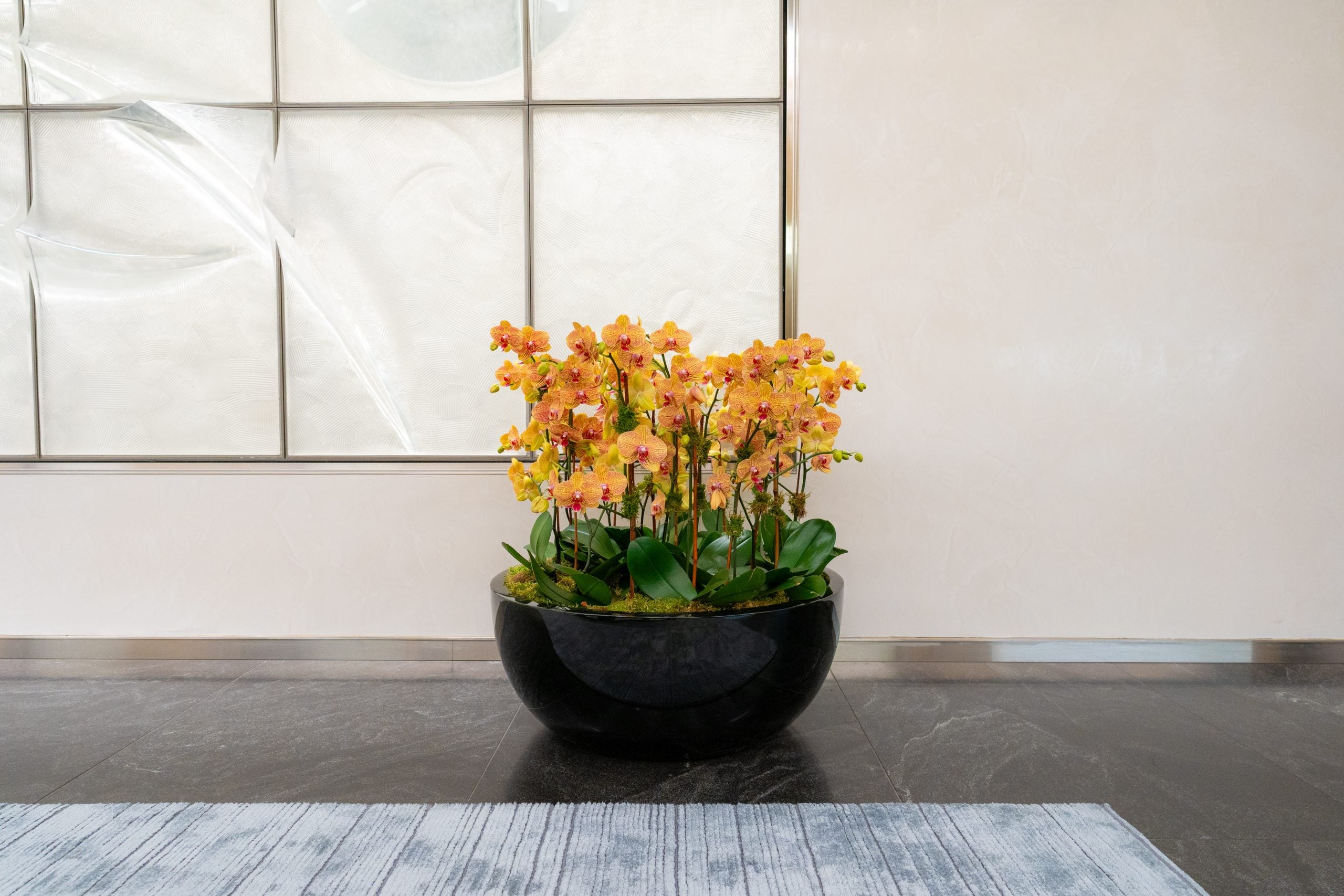
A plant is only part of the design. A well-chosen dracaena in a generic or undersized container sends a mixed message about the building’s attention to detail, regardless of how healthy the plant itself looks. The planter’s material, finish, and scale communicate as much as the specimen inside it, and both deserve the same level of consideration.
Concrete planters read well against industrial finishes and polished concrete floors. Brushed metal complements modern interiors built around glass and steel. Natural wood or ceramic can soften a lobby that already carries warm tones in its materials. The goal is coherence rather than strict coordination; planters should feel like a considered part of the environment, not an afterthought introduced alongside the plants.
For buildings with corporate tenants or a defined visual identity, custom planter options allow the greenery program to align directly with brand standards. At that level, the plants and their containers become part of how the property communicates its character, not simply how it looks on any given day.
Plant Selection, Brand Identity, and the Tenant Experience
The plants in a lobby communicate a building’s character before anyone speaks.
A tall, architectural arrangement with clean lines projects precision and authority. A layered composition featuring varied textures and heights feels warm and welcoming. Meanwhile, a single, carefully chosen statement plant conveys restraint and sophistication.
Each approach can be effective, as long as the selection reflects deliberate intent and that the greenery program is maintained consistently to deliver on that intent every day.
For building managers, that connection between interior greenery and tenant experience provides a practical business argument for treating the planting program as a long-term asset rather than a variable expense.
Seasonal updates bring an extra layer of dynamic appeal. By strategically rotating and refreshing plant displays across the seasons, building managers and interior landscapers ensure lobbies remain fresh, engaging, and in harmony with the time of year.
For properties that also invest in holiday decor, the transition from year-round greenery to seasonal installations is worth approaching with the same level of planning as the original plant selection. Our guide on how to decorate a commercial lobby for the holidays covers that process in detail for building managers planning ahead.
Make Sure Your Lobby Communicates the Right Thing
Plants in a commercial lobby are far more than decorative details because they are an integral part of how a building presents itself to everyone who passes through.
The right species, properly scaled and paired with complementary containers, creates a first impression that reinforces the property’s commitment to quality. Conversely, a poor selection quietly and consistently works against that image every single day.
At Cambridge, we bring more than 25 years of commercial design experience to landscaping projects across the tri-state area, handling every stage of the process from initial design selection and installation through ongoing maintenance and seasonal updates. Contact our team today to request a custom consultation.