
Year-round landscaping plants are species selected to work together as a planting that holds structure, color, or texture through every season while tolerating the demands of an urban site, keeping a property looking intentional even in the middle of January.
For NYC building managers and property owners, that consistency carries real weight. A plaza or entrance that looks bare and neglected for three or four months sends the wrong message to tenants, visitors, and prospective clients, and curb appeal is one of the first things a commercial audience judges.
This guide covers the essentials, such as what year-round performance means in NYC specifically, which species reliably deliver it, and how professional plant selection protects budgets over time.
What Year-Round Performance Means for NYC Commercial Properties

Curb appeal that lasts all year comes from combining reliable performers rather than leaning on any single plant. Evergreens and structural grasses carry the winter while plants that peak in spring, summer, and fall keep the scheme active the rest of the year, so something is always contributing interest even in January. No individual plant looks identical in every month, but a well-built scheme never has a dead stretch, which is the real goal.
Every reliable plant list for the five boroughs begins from the same climate baseline. According to the USDA Plant Hardiness Zone Map, New York City sits in Zone 7b, and a species has to be hardy to that zone before anything else matters. Exposure to freeze-thaw cycles, road salt, and wind then narrows the options further, since a plant rated for the zone can still fail in the wrong spot.
What counts as success on a commercial property is a higher bar than in a backyard garden. Building managers need consistent presentation across high-traffic entrances, where the landscape supports tenant experience and brand identity every day of the year, which is why professional commercial landscaping leans on plants proven to perform under pressure rather than seasonal novelties.
Evergreens and Grasses That Hold Structure Through Winter
Most plantings go dormant in winter, and a poorly planned bed looks empty just when the property is most exposed to view. Evergreens and cold-tolerant grasses are what carry a commercial landscape through those hardest months, provided each is matched carefully to its bed’s exposure.
Evergreens Matched to Exposure
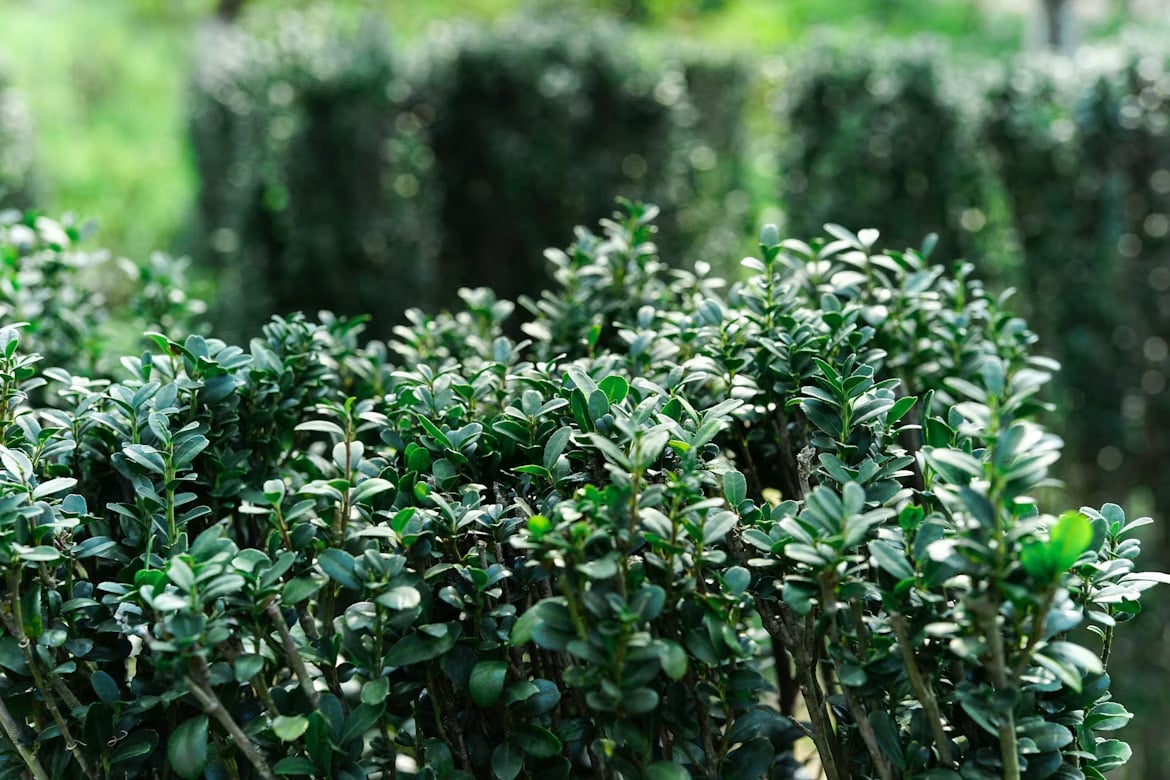
For protected interior courtyards and set-back beds, reliable broadleaf and needled evergreens such as boxwood and dwarf conifers anchor a design and hold their form once deciduous plants drop their leaves. For salt-exposed street frontage and sidewalk-adjacent beds, inkberry holly and juniper are the safer choices, since both tolerate the winter salt drift that causes boxwood to brown and decline.
Site-matching cannot be skipped here, because the same evergreen can thrive in one bed and struggle ten feet away, depending on salt exposure and the reflected heat coming off pavement and building glass. Getting each species onto the right site is the difference between a planting that lasts and one that needs replacing every couple of seasons.
Grasses for Winter Texture and Movement
Beyond the evergreens, warm-season grasses like switchgrass and maiden grass add a second layer of winter interest, holding their seed heads and warm golden foliage through the cold months and swaying in the wind in ways woody plants cannot.
On commercial sites, maiden grass is best specified as a clumping, low-seeding cultivar, which gives the same winter structure without the spread of the older varieties. Feather reed grass, usually planted as the ‘Karl Foerster’ variety, offers an upright alternative that keeps its plumes through snow and handles the compacted clay common to NYC tree pits and street beds.
Their maintenance follows a simple rhythm, left standing through winter for both appearance and wildlife value, then cut back to near ground level in late winter before new growth begins.
Seasonal Layers So Something Always Performs
Individual species are only the starting point, since the strategy that actually makes a landscape read as maintained all year is layering, pairing plants with different peak windows so interest rotates through the seasons. Spring bulbs, summer perennials, fall foliage, and winter structure each take their turn while the others rest.
A layered commercial bed near a building entrance might look like this across the year.
- Spring brings early bulbs and the fresh bloom of a serviceberry over emerging perennials.
- Summer shifts to salvia, nepeta, and coneflower for sustained color through the warmest months.
- Fall turns to the foliage of serviceberry and the seed heads of switchgrass and maiden grass.
- Winter rests on structure, with evergreens, standing grasses, and the bare architecture of the serviceberry carrying the bed.
The advantage shows up when one plant fades or has an off year, because another is already performing to cover the gap and the frontage never looks bare. Lower visual risk like this is what keeps a commercial property looking cared for in every season, and it is a principle Cambridge brings to entryway landscape design, where first impressions carry the most weight.
Plants That Withstand NYC Urban Stressors
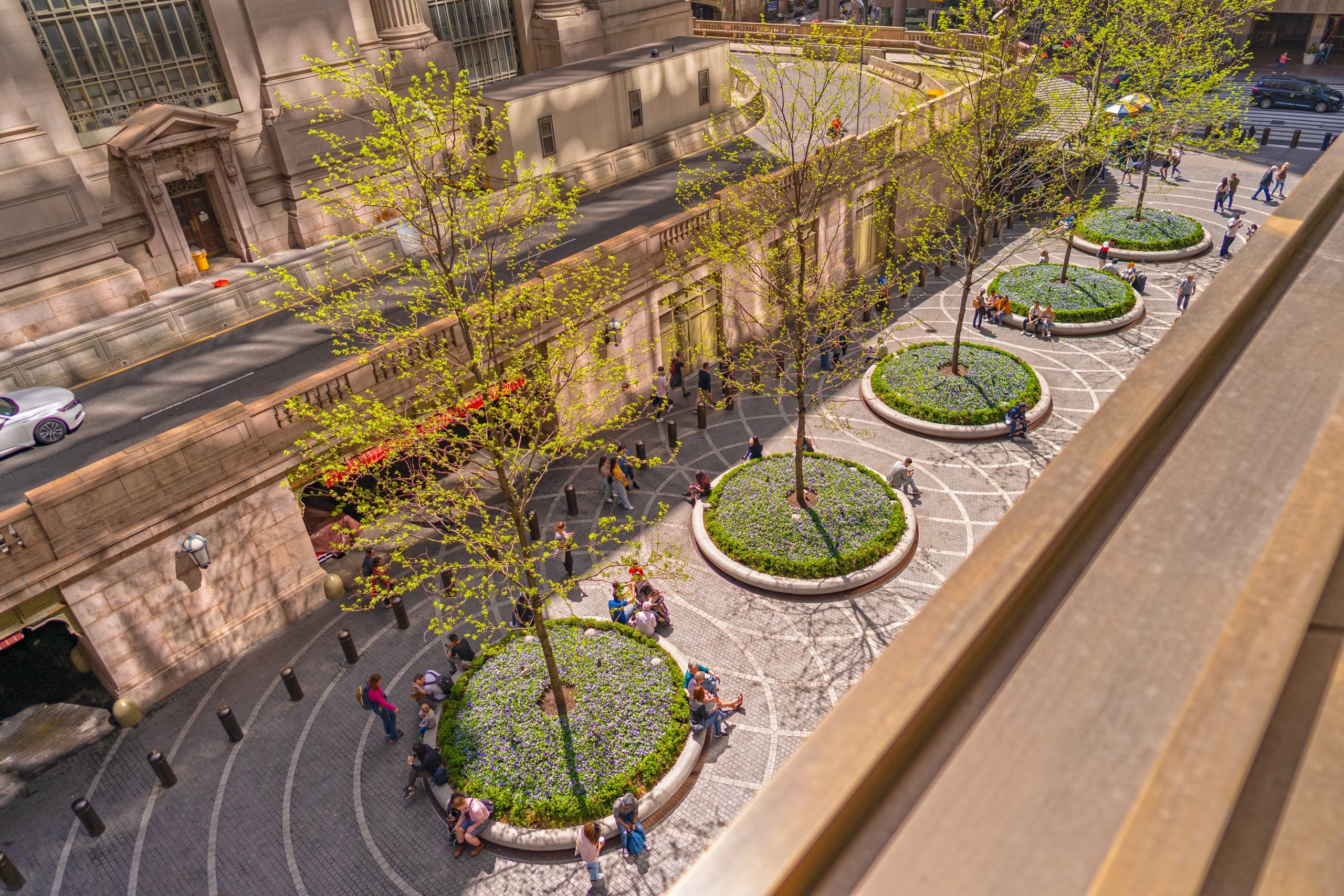
Even the most beautiful plant is a poor investment if it cannot survive a New York City streetscape. Reflected heat off glass and pavement, compacted low-nutrient soil, road salt, and restricted root space all shorten the life of the wrong species, so durability is what ultimately protects the money spent on a planting.
A handful of species earn their place in exactly these conditions. Serviceberry tolerates air pollution and clay soil, handles drought once established, and delivers spring bloom and strong fall color, making it a rare plant that is both tough and ornamental. On hot, lean, compacted sites at ground level, salvia, nepeta, and sedum hold up where fussier perennials decline, and in the shadier, tougher corners those sun-lovers dislike, heuchera fills the same role.
Species choice alone is not enough, so the site itself has to be addressed directly. Structural soil and proper tree-pit design ease compaction and give roots the room they need, and matching the right plant to the right condition is the standard that the NYC Street Design Manual applies to public plantings. Carrying that same logic onto private commercial property prevents early decline and the cost of repeated replacement, which is why reliable commercial landscaping in New York City depends on getting these matches right before the first plant goes in the ground.
The Long-Term Payoff of Smart Plant Selection
The payoff of choosing year-round landscaping plants with care shows up long after installation. Plants matched to their exposure and to NYC’s urban stressors require fewer replacements, fewer emergency fixes, and less corrective maintenance over the life of the landscape, so the upfront discipline of getting the species right controls costs down the road.
That discipline also produces the outcome commercial clients actually want, which is consistent curb appeal, a stronger tenant experience, and long-term property value that a neglected-looking frontage quietly erodes. Cambridge has built year-round commercial landscapes across NYC and the tri-state area for property owners, building managers, and institutions that cannot afford an off-season, and that experience shapes every plant list the team recommends.
If you are planning a landscape that has to look its best in every season, we would welcome the chance to help. Contact Cambridge to talk through a year-round commercial planting plan built for your property and its conditions.