Cambridge‘s team of commercial decor experts recommends that most NYC building managers begin holiday decor planning no later than spring, with vendor outreach ideally starting between April and June.
Availability is only part of the reason. Vendors, permits, tenant schedules, custom production timelines, and building logistics all require months of coordination to align properly. In a city as operationally complex as New York, that coordination takes longer than most people expect.
This post covers the structural reasons behind that lead time, a month-by-month planning timeline building managers can reference, how building type affects where to start, and how to coordinate installation around tenants and NYC requirements.
Why Holiday Decor Planning in NYC Takes Longer Than You Think
NYC’s density and operational complexity add layers to the planning process that do not exist in other markets. Before a single ornament goes up, building managers typically need to account for freight elevator scheduling, loading dock access windows, management approvals, and, for certain installations, filing requirements with the NYC Department of Buildings.
At the vendor level, reputable commercial holiday decor companies in NYC book up months in advance. Waiting until fall means narrower options, reduced customization, and, often, higher pricing. The vendors with the strongest portfolios and deepest experience are the ones who fill their calendars earliest.
Large-format and custom installations require the most lead time. Oversized holiday trees, LED-lit structural elements, and branded display pieces require sourcing and production time that can span several weeks. These are not items that can be ordered in October and installed in November. By the time a building manager begins conversations in September, many of those options are no longer available.
When to Start: A Month-by-Month Planning Timeline

A structured planning calendar distributes the decision-making load across a manageable window of time and reduces the pressure that comes with compressing everything into the fall.
- Tip: The same disciplined approach that supports seasonal landscape planning applies equally to holiday decor.
January through March is the time for a post-season debrief. What worked well? What fell short? Were there installation conflicts, tenant complaints, or logistical bottlenecks? Capturing those observations while they are fresh informs smarter decisions for the following year. This is also the right time to open internal budgeting conversations and revisit broader property priorities.
April through June is when building managers should initiate conversations with commercial decor vendors. Share building specs, aesthetic goals, access constraints, and your overall vision. Use this period to explore concepts and gather preliminary proposals. Starting here gives your team the full range of available options before the competitive booking season narrows availability.
July through August is when design direction should be finalized and concepts approved. This is the window when production timelines for specialty and custom elements begin. Decisions made here directly determine what is achievable come December, which means delays in this period have a compounding effect on everything that follows.
September through October is when the operational work begins in earnest. Confirm installation dates, coordinate with building operations and tenant contacts, and file any required NYC permits for structural or electrical installations. This is also the time to lock in removal scheduling. Removal is often treated as an afterthought, but it deserves the same planning attention as installation.
November is for pre-installation preparation and final confirmation. Conduct site walk-throughs with your installation crew, confirm all deliveries and access logistics, and resolve any remaining conflicts in building operations before crews arrive. Issues surfacing at this stage are almost always the result of something that could have been addressed weeks earlier.
December is installation and seasonal monitoring. Execute the installation according to the approved schedule, with crew access coordinated around tenant activity and building operations. Monitor the display throughout the season for any maintenance needs, and ensure a plan is in place for post-holiday removal.
What Happens When You Wait Until Fall
Vendor availability narrows significantly after August, and the most in-demand commercial decor companies are often fully booked by September. Building managers who start conversations in the fall are typically choosing from whatever remains, which means fewer custom options and less experienced teams.
When timelines compress, the design approval process does too. Rushed decisions increase the risk of installation conflicts with tenants and building operations, and there is less time to resolve problems when they surface. Buildings that wait until fall often end up with displays that reflect the limitations of a late start, and those limitations are visible to everyone who walks through the lobby.
How Building Type and Size Shape Your Timeline
Lead time is not one-size-fits-all. The right starting point depends on the scale and complexity of the property.
High-rise office towers and mixed-use buildings with multiple tenants are the most demanding environments to coordinate. More stakeholders, more scheduling constraints, and more logistics mean the planning window needs to start earlier and run more deliberately. For these properties, April outreach is ideal.
Hotels and hospitality properties present a different kind of complexity. Brand standards and aesthetic guidelines frequently require internal approval rounds before a vendor can be formally engaged. Building that approval cycle into the timeline from the start avoids delays downstream.
Smaller commercial buildings and single-tenant properties may have more scheduling flexibility, but even they benefit from starting vendor conversations by spring. Locking in a strong vendor relationship and confirming design direction early leads to better outcomes at every property size.
Key Factors That Add Time to the Process
Several variables can extend the planning window beyond what a standard timeline would suggest:
- A large number of tenant stakeholders who need to weigh in on the design direction
- NYC DOB permit requirements for structural or electrical installations
- Custom or branded design elements that require production lead time
- Buildings with restricted access windows for freight, deliveries, or after-hours work
If two or more of these apply to a property, starting in April rather than waiting until June is a meaningful difference in what is achievable.
Coordinating Installation Around Tenants, Operations, and NYC Requirements
Executing a holiday decor installation in a live commercial environment requires careful coordination with the people and systems that keep the building running, not just a skilled crew and quality materials.
Tenant communication should begin well before installation. Building managers should notify tenants of planned installation dates, expected disruptions, and any temporary closures of lobbies or common areas with enough lead time for tenants to plan accordingly. Surprises at this stage damage goodwill and create friction that is entirely avoidable.
Large-format holiday installations may also trigger NYC Department of Buildings permit requirements, particularly for temporary structures above certain size or height thresholds. Confirming whether a permit applies early in the process, and accounting for filing and processing time, is far easier than addressing it once the installation schedule is already set.
Installation crews working in occupied commercial buildings must navigate freight elevator availability, loading dock access, building security protocols, and any blackout periods during high-traffic business hours. Coordinating those constraints in advance, rather than working around them on installation day, is what separates a smooth execution from a stressful one.
Removal scheduling deserves the same planning attention as installation. Post-holiday removal conflicts are common, entirely predictable, and entirely avoidable with early coordination.
The Case for Planning Your Holiday Decor Program in the Spring
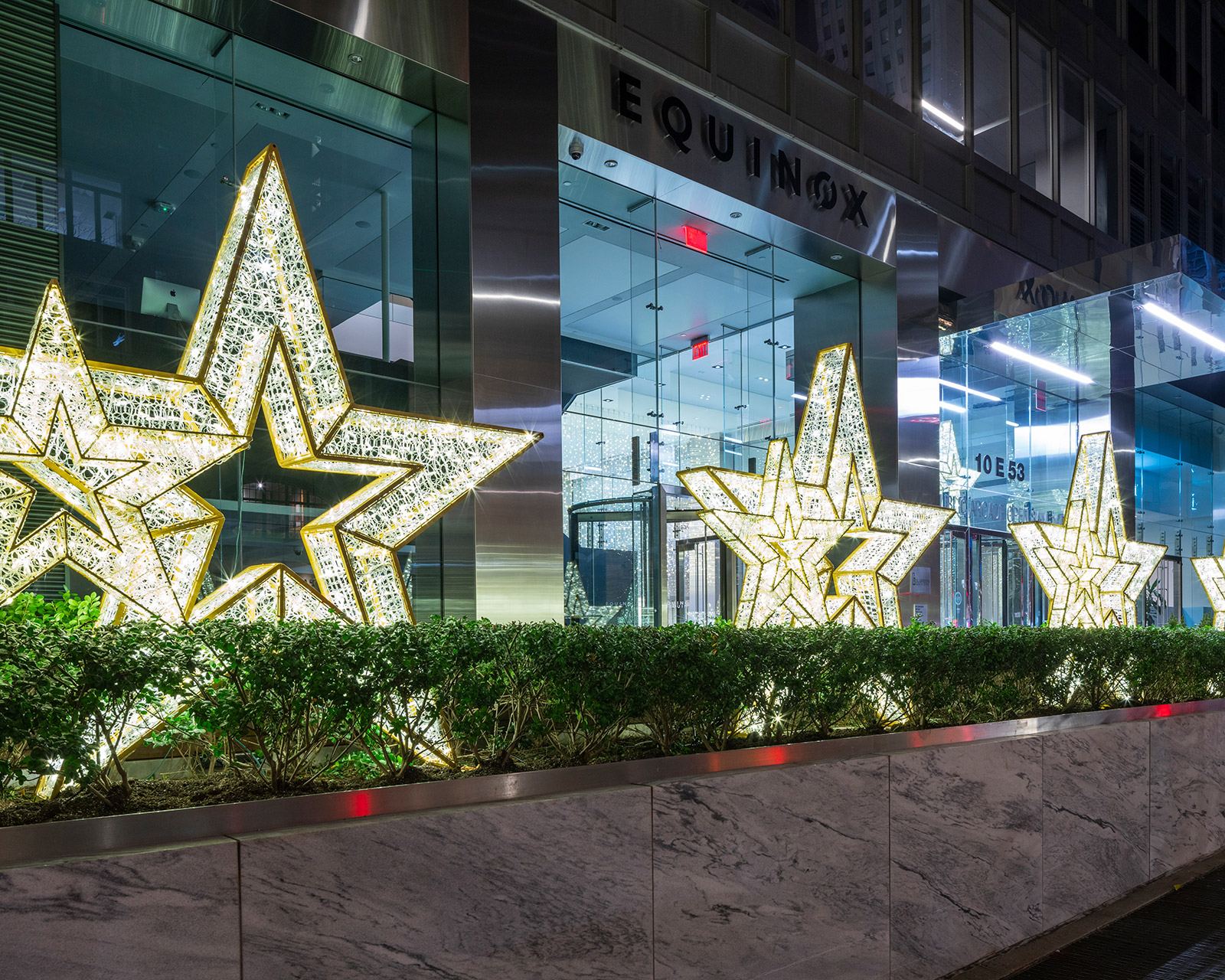
In NYC commercial real estate, the buildings with the most striking holiday displays are almost always the ones whose building managers started planning in the spring. Early planning leads to stronger vendor relationships, a broader range of design options, a smoother experience for tenants and visitors, and an installation process that runs according to plan rather than around obstacles.
At Cambridge, we partner with building managers across NYC to develop commercial holiday decor programs that are as well-planned as they are well-designed. If you are thinking about next season, now is the right time to start the conversation. Contact our team to begin planning your holiday decor program.