New York City summers are unforgiving. From June through September, commercial landscapes across Manhattan, Queens, Brooklyn, and the outer boroughs face a combination of sustained heat, high humidity, and relentless foot traffic that few other cities can match. For building managers, this season represents one of the highest-risk periods for landscape deterioration, and one of the most important opportunities to protect that investment before problems compound.
Summer landscape maintenance is not simply a matter of appearance. A neglected plaza or entryway in peak season signals operational inattention to tenants, visitors, and prospective clients. Replacing stressed or dead plantings mid-season costs significantly more than maintaining them through it. The managers who treat their summer commercial landscaping program as a proactive operational priority consistently see better long-term outcomes than those who respond only when something looks visibly wrong.
This post covers five areas every NYC building manager should understand heading into summer. The topics range from how heat and humidity stress commercial plantings and why irrigation schedules need to change, to recognizing pest and disease pressure, conducting mid-season reviews, and scheduling maintenance around tenant activity without creating friction.
NYC Heat and Humidity Put Commercial Plantings Under Serious Stress
Urban heat is a documented phenomenon in New York City. According to a 2024 study by Climate Central, NYC’s built environment makes temperatures an average of 9.7°F hotter for residents than they would be otherwise, the highest figure recorded among 65 cities studied. For commercial plantings in plazas, courtyards, and building entrances, this means the effective stress load on root systems and foliage is substantially greater than standard temperature readings suggest. The effect is driven by a combination of heat-absorbing pavement, reduced tree canopy, and limited airflow between buildings.
Humidity compounds this problem in a specific way. While moisture in the air might seem like a mitigating factor, high humidity during warm months creates favorable conditions for fungal pathogens, including powdery mildew and root rot. Poor drainage combined with stagnant humid air accelerates the cycle: stressed plants are more susceptible to infection, and infected plants decline faster under heat stress.
Which Environments Are Most Vulnerable
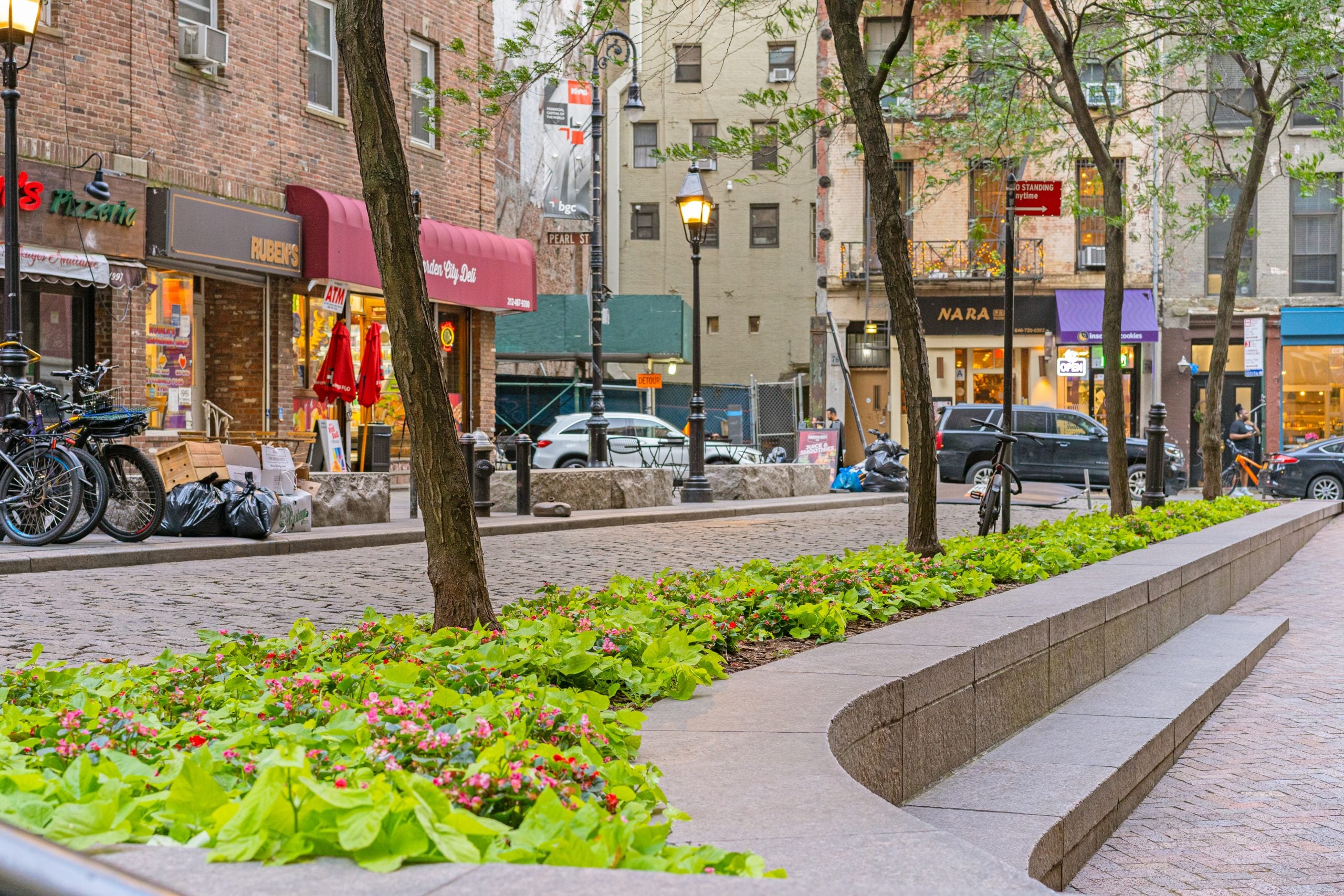
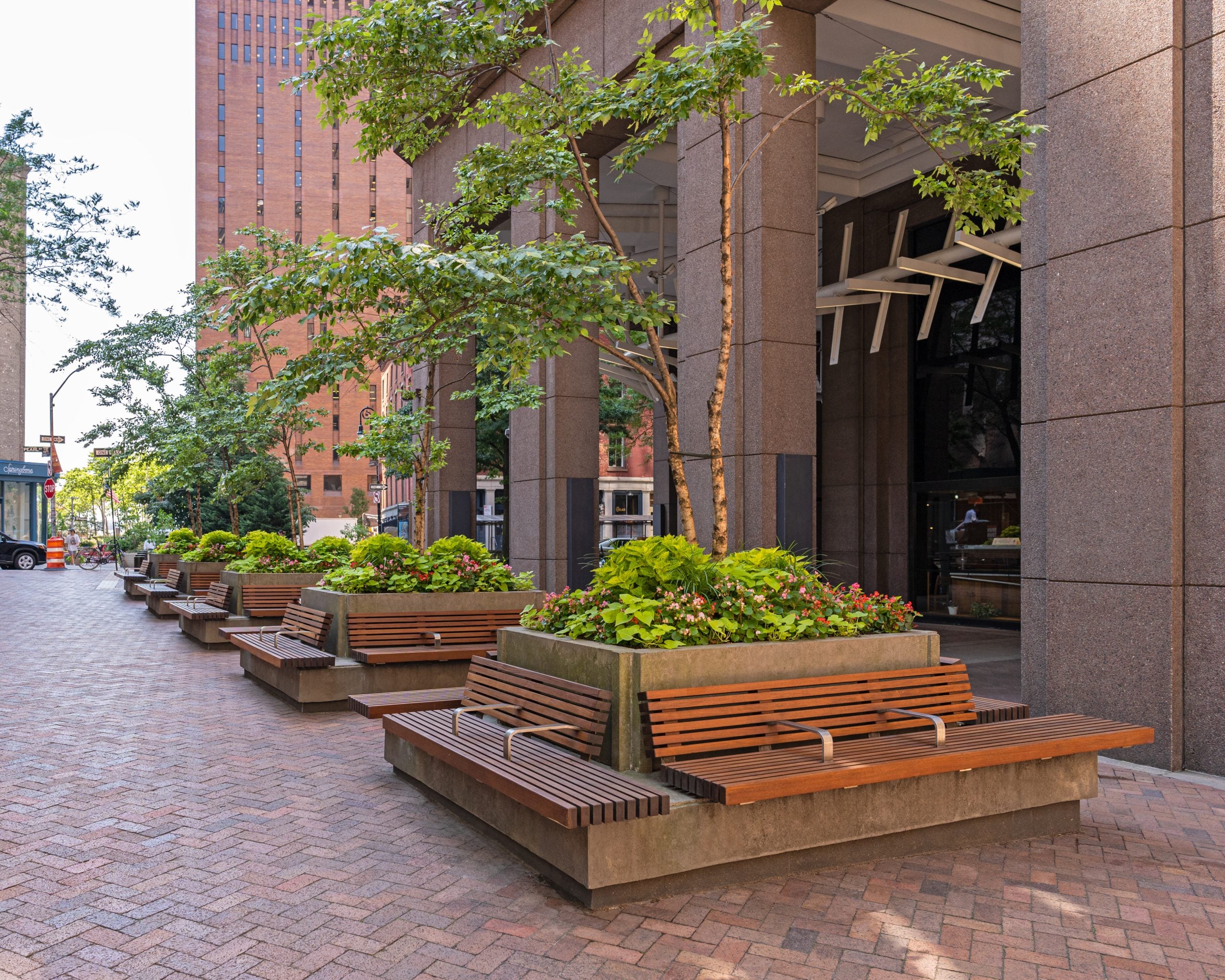
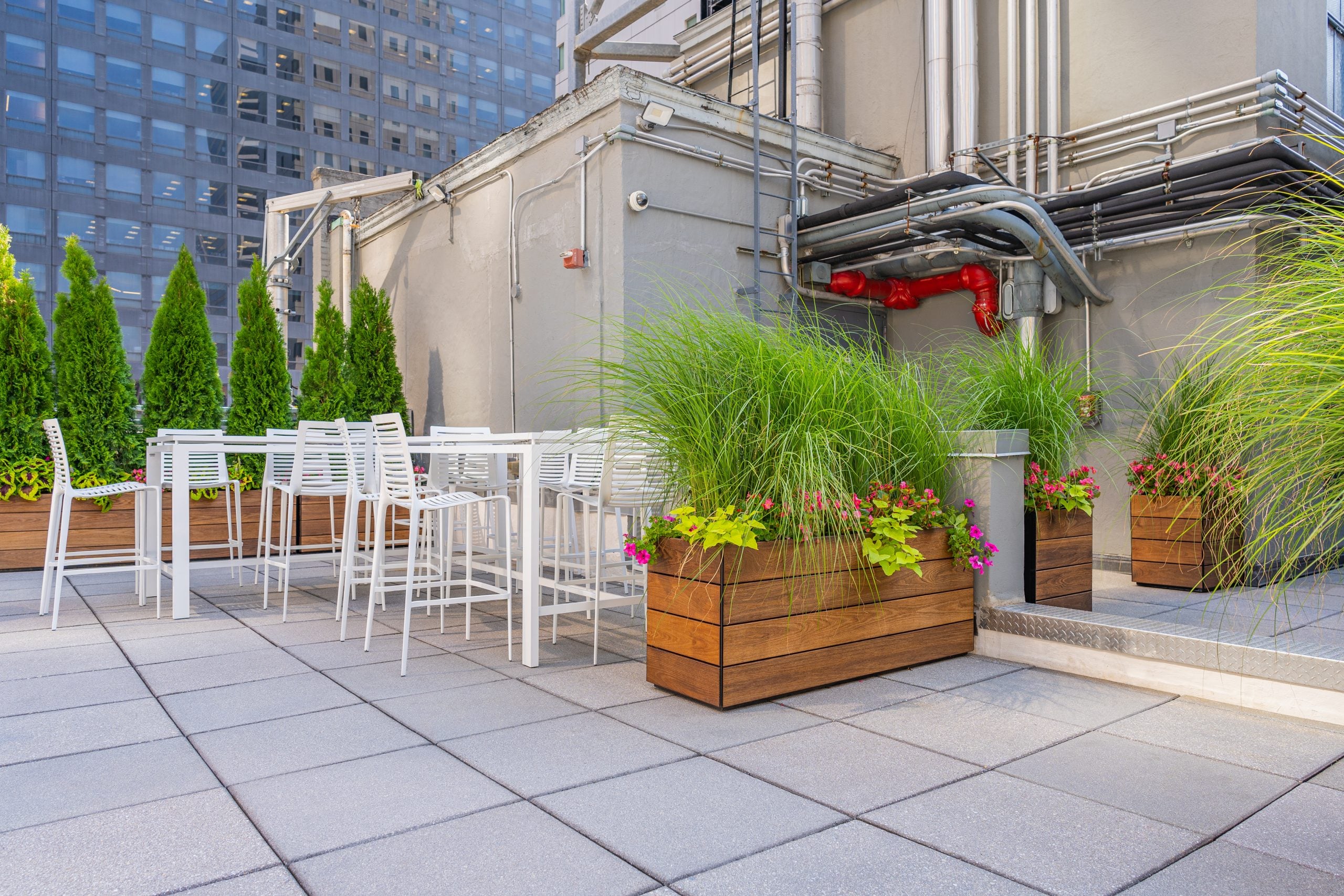
Not all commercial plantings carry equal risk. Rooftop installations face amplified heat exposure and wind, with limited soil volume to buffer temperature swings. Entryways and plazas with heavy hardscaping retain and radiate heat at ground level, creating microclimates that push plants well beyond their comfort range. Planters and containers, common in commercial lobby approaches and streetscapes, dry out significantly faster than in-ground installations and require closer monitoring.
Knowing where your most vulnerable plantings are located gives you a clearer picture of where to focus attention during summer maintenance checks.
High-Traffic Spaces Require Adjusted Irrigation in Summer
Irrigation timing and frequency that worked in the spring often fall short once July arrives. In high-traffic commercial environments, soil compaction from pedestrian activity reduces permeability, meaning water runs off rather than absorbing into the root zone. At the same time, sustained heat accelerates evaporation, pulling moisture from the soil faster than it can be replenished on a standard schedule.
For NYC commercial properties, two adjustments are worth discussing with your landscape contractor at the start of the season. First, irrigation frequency should increase during sustained heat events, particularly for containerized plants and exposed plaza plantings. Second, timing matters: watering during early morning hours reduces evaporation loss and ensures foliage dries before the heat of the day, lowering fungal risk.
Building managers should also watch for signs of both underwatering and overwatering, as the symptoms can look similar. Wilting, yellowing leaves, and dry, pulling-away soil edges suggest drought stress. Yellowing paired with soft, waterlogged soil at the base and a persistent musty smell often points to overwatering or drainage failure. Flagging either condition promptly to your contractor allows for faster course correction before plant loss occurs.
Pest and Disease Pressure Peaks During NYC Summers
The same conditions that stress commercial plantings also invite pests. Aphids, spider mites, and scale insects all thrive in hot, dry conditions and tend to concentrate on plants that are already weakened by heat or water stress. In NYC’s dense urban planting environments, infestations spread quickly from plant to plant, particularly in arrangements with limited airflow.
Fungal diseases follow a parallel track, as warm overnight temperatures paired with high humidity create extended periods during which fungal spores can germinate on foliage. Urban pollution exposure can also compromise the natural waxy coating on leaves that acts as a first line of defense, making commercial plantings in high-traffic areas somewhat more susceptible than those in less congested environments.
Building managers do not need to diagnose these issues, but knowing what to document makes a significant difference. Photographs of affected areas with timestamps, notes on when the change first appeared, and observations about whether the problem is spreading help your landscape team respond faster and more accurately. Waiting until the next scheduled visit to mention a problem that appeared two weeks ago can mean the difference between a simple treatment and a full replacement.
Spring Installations Need a Mid-Season Review
A strong spring installation does not guarantee a strong summer performance. Most commercial landscape plans are designed with seasonal flexibility in mind, but the shift from spring conditions to peak summer heat is significant enough that a mid-season walkthrough is standard practice for well-managed properties.
A mid-season review should cover several areas: overall plant health and stress indicators, soil moisture and drainage conditions, mulch coverage (which breaks down over the season and loses its ability to retain moisture and regulate soil temperature), and any areas where plant loss or decline has begun. It is also the right moment to evaluate whether the original design is performing as expected or whether adjustments to plant selection, irrigation, or layout would improve the outcome.
When it comes to deciding between adjustments and replacements, visibility and foot traffic should guide prioritization. Plantings at building entrances, street-facing plazas, and lobby approaches carry the highest reputational weight and should be addressed first. Back-of-property or lower-visibility areas can often tolerate a longer timeline. A commercial landscape partner with good seasonal planning practices will factor these priorities into their recommendations rather than treating every correction as equal.
This is also where the original design’s built-in flexibility pays off. Plans that account for seasonal variability, allowing for plant swaps, phased replacements, or adaptive irrigation, reduce the cost and disruption of mid-season corrections. A rigid design with no room for adjustment leaves building managers with a binary choice between accepting decline or absorbing the full cost of replacement. Proactive seasonal landscape planning is what keeps that decision off the table in the first place.
Maintenance Scheduling Should Account for Tenant Activity
The operational dimension of summer landscape maintenance often gets less attention than the horticultural one, but for building managers, it carries real consequences. Landscaping crews arriving during peak building entry hours, running equipment outside tenant-facing windows during business hours, or limiting access to key building approaches create friction that reflects poorly on building management.
A well-constructed summer maintenance schedule accounts for peak tenant and visitor patterns. For office buildings, this typically means avoiding early morning arrivals that coincide with the pre-9 a.m. rush and midday windows when foot traffic through entryways and plazas peaks. For retail and hospitality properties, weekend and evening hours require more careful coordination.
Communication is a straightforward but often overlooked lever. A brief advance notice to tenants about planned landscape work, even just a building-wide email noting the day, scope, and expected duration, reduces complaints and sets appropriate expectations. The right commercial landscaping services provider should proactively raise scheduling logistics with building management, giving managers the information they need to notify tenants in advance.
Noise, access, and traffic flow in active commercial buildings all require planning. Building managers should expect their landscape contractor to initiate this coordination rather than waiting to be asked. If your current provider does not raise these considerations proactively, it is worth discussing expectations before the season peaks.
Make Your Building’s Summer Landscape Work for You
Neglected summer maintenance has a compounding cost structure. Minor stress in June turns to visible decline in July, plant loss in August, and an expensive late-season or fall replacement program that costs significantly more than the maintenance would have. Tenant dissatisfaction with the state of shared outdoor spaces is among the more common building management complaints during the summer months, and it is largely avoidable.
The building managers who consistently navigate summer landscape maintenance well share one common characteristic: they work with a commercial landscape partner who anticipates these challenges and addresses them systematically, rather than waiting to be called when something looks wrong.
Cambridge has provided commercial landscaping services across NYC and the tri-state area since 2001. From plaza plantings and rooftop installations to entryway landscape design and seasonal maintenance programs, our team understands the specific demands of urban commercial environments: the heat, the traffic, the scheduling constraints, and the expectations of tenants and visitors.
If summer maintenance for your building’s landscape program needs a closer look, contact the Cambridge team today to request a consultation.